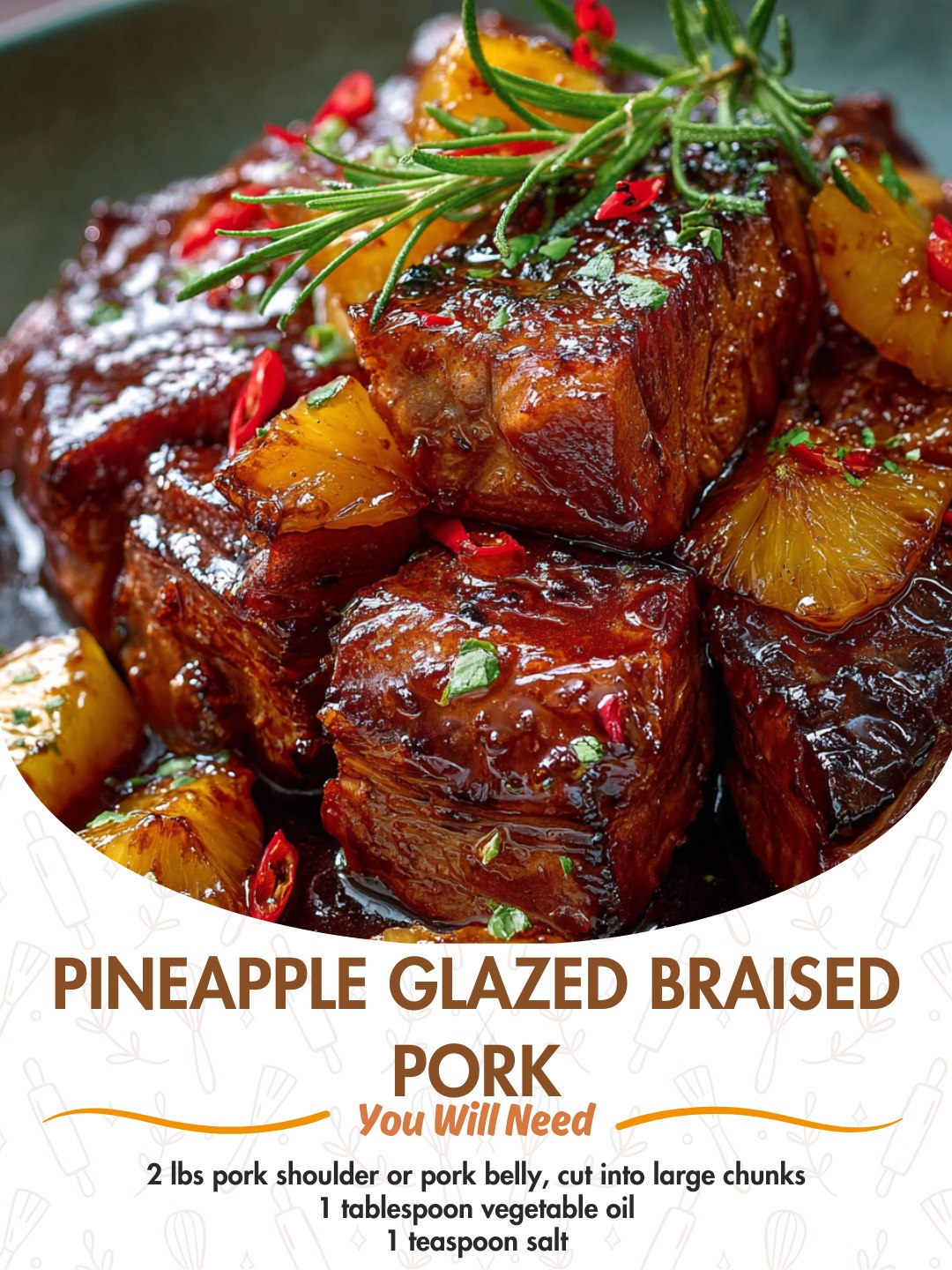
Pro Tips for Best Results
My biggest tip is to embrace the sear. I tested this once where I rushed the browning, and the final dish lacked that deep, foundational savoriness. Take the time to get good color on every piece of pork. It builds layers of flavor that the braising liquid then absorbs and redistributes. It’s the difference between a good dish and a great one.
For the pineapple, ripeness is key. I look for a pineapple that smells fragrant at the stem and gives slightly to pressure. A rock-hard, green pineapple won’t have developed enough natural sugar, and your glaze won’t caramelize as beautifully. If your pineapple isn’t super ripe, adding the full two tablespoons of honey to the glaze is a must.
Finally, don’t be afraid of the braising time. Pork shoulder is a tough cut that needs that long, slow, moist heat to transform. I tried pulling it out at the two-hour mark once, and while it was cooked, it wasn’t that magical, fall-apart texture we’re after. The full 2.5 hours (and sometimes even 3 for a larger piece) is non-negotiable for perfection.
Common Mistakes to Avoid
The first time I made this, I made the classic mistake of adding all the pineapple to the braise. The result was that the long cook time completely broke down the fruit, making the sauce overly sweet and one-dimensional. Saving half for the fresh glaze at the end provides that necessary punch of bright, tangy fruit flavor that cuts through the richness. Do not do what I did—split your pineapple as the recipe directs.
Another pitfall is using a pot that’s too small or flimsy. If the pot is crowded, the pork will steam instead of sear. And a thin-bottomed pot can lead to hot spots and burning during the long oven time. I can’t stress enough how much a heavy, enameled Dutch oven changed my braising game. It distributes heat evenly and holds it steady for hours, giving you perfectly tender results every single time.
Serving Suggestions
I love serving this pork family-style, right in the middle of the table. My absolute favorite way is over a big bowl of fluffy, steamed jasmine rice. The rice soaks up every last drop of that incredible pineapple-infused sauce, creating the perfect bite. A simple sprinkle of sliced green onions and toasted sesame seeds adds a fresh crunch and nutty finish that makes the whole dish pop.
For veggies, I always go for something crisp and green to balance the richness. A quick cucumber salad with a rice vinegar dressing, or some simply steamed bok choy or broccoli, are my go-tos. The clean, fresh taste is the ideal counterpart to the sticky-sweet pork. It’s a contrast that feels intentional and complete.
On more casual nights, we’ve even piled this pork onto toasted brioche buns with a swipe of mayo and a handful of crunchy slaw. It makes the most unbelievable gourmet sandwich. However you serve it, just make sure you have plenty of napkins on hand—this is gloriously messy, finger-licking food.
Variations & Customizations
This recipe is wonderfully adaptable. If you love a bit of heat, I’ve added a couple of sliced Thai red chilies or a big spoonful of gochujang (Korean chili paste) to the braising liquid with fantastic results. The spice plays off the sweetness in the most addictive way. My friend who doesn’t eat pork has made this with chicken thighs (reducing the braise time to about 1 hour), and it was still delicious.
For a different flavor profile, you can swap the soy sauce for tamari (great for gluten-free) or even coconut aminos for a slightly sweeter, milder taste. I’ve also substituted the brown sugar in the glaze with pure maple syrup for a deeper, earthier sweetness—it’s a lovely autumnal twist.
If you’re a fan of other tropical fruits, mango makes a stunning substitute for the pineapple in the glaze. The method is exactly the same. I’ve also stirred in a tablespoon of lime zest into the finished glaze for an extra citrus zing. It’s your kitchen—have fun and make it yours!
How to Store, Freeze & Reheat
Any leftovers (a rare occurrence in my house) keep beautifully. I let the pork cool completely, then store it airtight in the refrigerator with all its sauce for up to 4 days. The flavor actually deepens and improves on the second day. To reheat, I gently warm it in a covered saucepan over low heat with a splash of water or broth to loosen the sauce, stirring occasionally. Microwaving can make the pork a bit tough, so the stovetop is my preferred method.
This pork freezes exceptionally well for up to 3 months. I freeze it in its sauce in a single layer in a sealable bag, pressing out all the air. To thaw, I leave it in the fridge overnight and then reheat as described above. The texture holds up perfectly, making it a fantastic make-ahead meal for busy weeks.
Conclusion
This Pineapple Glazed Braised Pork is more than just a recipe to me; it’s a memory-maker, a Sunday simmer that promises warmth and satisfaction. It has brought my people to the table with eager smiles more times than I can count. I hope it finds its way into your kitchen and becomes a cherished staple in your home, too. Give it a try this weekend, and get ready for the compliments to roll in. Happy cooking