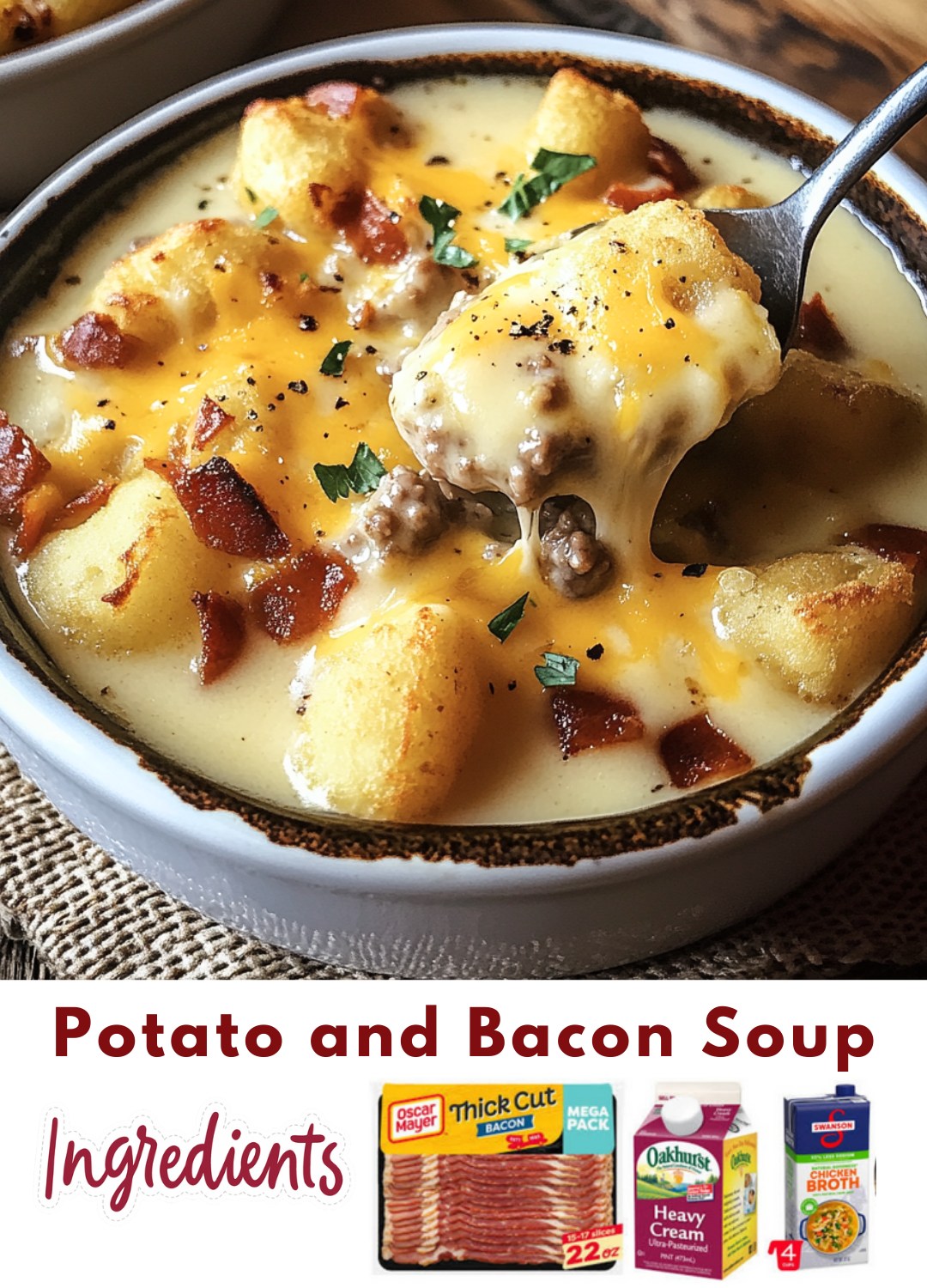
Now, it’s time for the heart of the soup. I add the cubed potatoes, dried thyme, smoked paprika, and a good pinch of black pepper to the pot, stirring to coat everything in that flavorful fat. Then, I pour in the chicken broth. The broth should just cover the potatoes; if it doesn’t, add a bit of water. Bring it all to a lively boil, then immediately reduce the heat to a gentle simmer. This is where the magic happens. I let it bubble away, uncovered, for about 15-20 minutes, until the potatoes are fork-tender. I check by piercing a cube; it should offer no resistance.
Finally, the creamy transformation. Once the potatoes are tender, I turn the heat down to low. This next step is crucial: slowly stream in the heavy cream while stirring constantly. Adding cream to very hot liquid too quickly can sometimes cause it to separate. Once it’s all incorporated, I let the soup heat through for another 5 minutes, but I never let it boil again. I taste it here—this is when I add salt. Be cautious, as the bacon and broth already add saltiness. I stir most of the cooked bacon back in, reserving a handful for garnish. The soup is ready when it’s heated through and irresistibly aromatic.
Pro Tips for Best Results
I tested the potato texture three different ways: leaving them very chunky, mashing half, and letting them cook until they just start to break down on their own. The winner for me is a combination. After adding the cream, I use the back of my wooden spoon to gently press about one-third of the potato cubes against the side of the pot. This releases their starch and thickens the soup naturally, creating a perfect texture that’s neither too brothy nor too puréed. It gives the soup a hearty, rustic body that I absolutely love.
Here’s what I learned the hard way about seasoning: wait. Do not add significant salt until the very end. Between the salty bacon, its rendered fat, and the chicken broth, your soup base is already well-seasoned. I made the mistake of salting the onions early on once, and the final soup was inedibly salty after it reduced. Now, I always do a final taste test after the cream is incorporated and just before serving, adding only a pinch if it truly needs it. Freshly cracked black pepper at the end, however, is a must.
For an even deeper flavor, I sometimes take an extra five minutes to sauté the onions until they just begin to caramelize, getting little golden-brown edges. It adds a subtle sweetness that beautifully balances the smokiness of the bacon and paprika. Also, let the soup rest off the heat for about 10 minutes before serving. This allows the flavors to marry and the soup to thicken to the perfect, spoon-coating consistency. It’s always better on the second day, too.
Common Mistakes to Avoid
The biggest mistake I made the first time was rushing the bacon. I cranked the heat to get it crispy fast, but it splattered everywhere, cooked unevenly, and some bits burned while others were limp. Medium heat is your friend here. It renders the fat slowly and evenly, giving you perfect crispy bacon and clean-tasting fat to cook with. Also, don’t drain all the bacon fat! Those 2 tablespoons you leave behind are the secret flavor bomb for the entire soup. Skimping here means missing out on so much depth.
Another common pitfall is overcooking the potatoes until they turn to total mush, or undercooking them so they’re still crunchy in the center. The sweet spot is tender but still holding their shape. Start checking at the 15-minute mark. And finally, do not let the soup come to a rolling boil after you’ve added the heavy cream. A simmer is okay, but a vigorous boil can cause the dairy to “break,” making the soup look slightly grainy or curdled. If this happens, it’s still safe to eat, but the texture won’t be as silky smooth.
(See the next page below to continue…)