Pro Tips for Best Results
My number one tip, learned after a batch of slightly flat pastries, is to ensure everything is cold before baking. After I assemble the danishes, I often pop the entire baking sheet into the freezer for a solid 10 minutes before they go in the oven. This re-chills the butter in the pastry, which leads to a higher, more dramatic puff. It’s a simple step that makes a huge visual difference.
I’ve tested the egg wash three different ways: with just egg, egg with milk, and egg with water. The pure egg wash gives the deepest, richest color and shine. For the sugar, using coarse sugar (like sanding sugar or turbinado) on the borders adds an incredible sparkling texture and crunch, but regular granulated sugar works perfectly fine on the filling. If you have it, use the coarse stuff for the edges.
Don’t overfill the danishes. I know it’s tempting to add more jam, but if you go past the border of your indentation, it will spill over and burn on the parchment paper. A heaping tablespoon is perfect. The jam bubbles and expands as it heats, so what looks like a modest amount turns into a perfect, generous pocket.
Common Mistakes to Avoid
The first time I made these, I was in a hurry and didn’t thaw my puff pastry properly. I tried to force-roll it while it was still icy in the middle, and it cracked and shattered along the fold lines. Don’t do what I did! Thaw it slowly in the fridge overnight, or on the counter for about 40 minutes. It should be pliable but still cold to the touch. If it gets too warm and sticky, just chill it again.
Another classic mistake is skipping the egg wash. I thought, “It’s just color, it’ll be fine.” It was not fine. Without it, the pastry baked up pale and a bit dull-looking, lacking that signature golden sheen. The egg wash isn’t just for color; it also helps the sugar adhere and creates a slight seal on the pastry edges. Just do it—it takes 30 seconds and elevates the whole experience.
Serving Suggestions
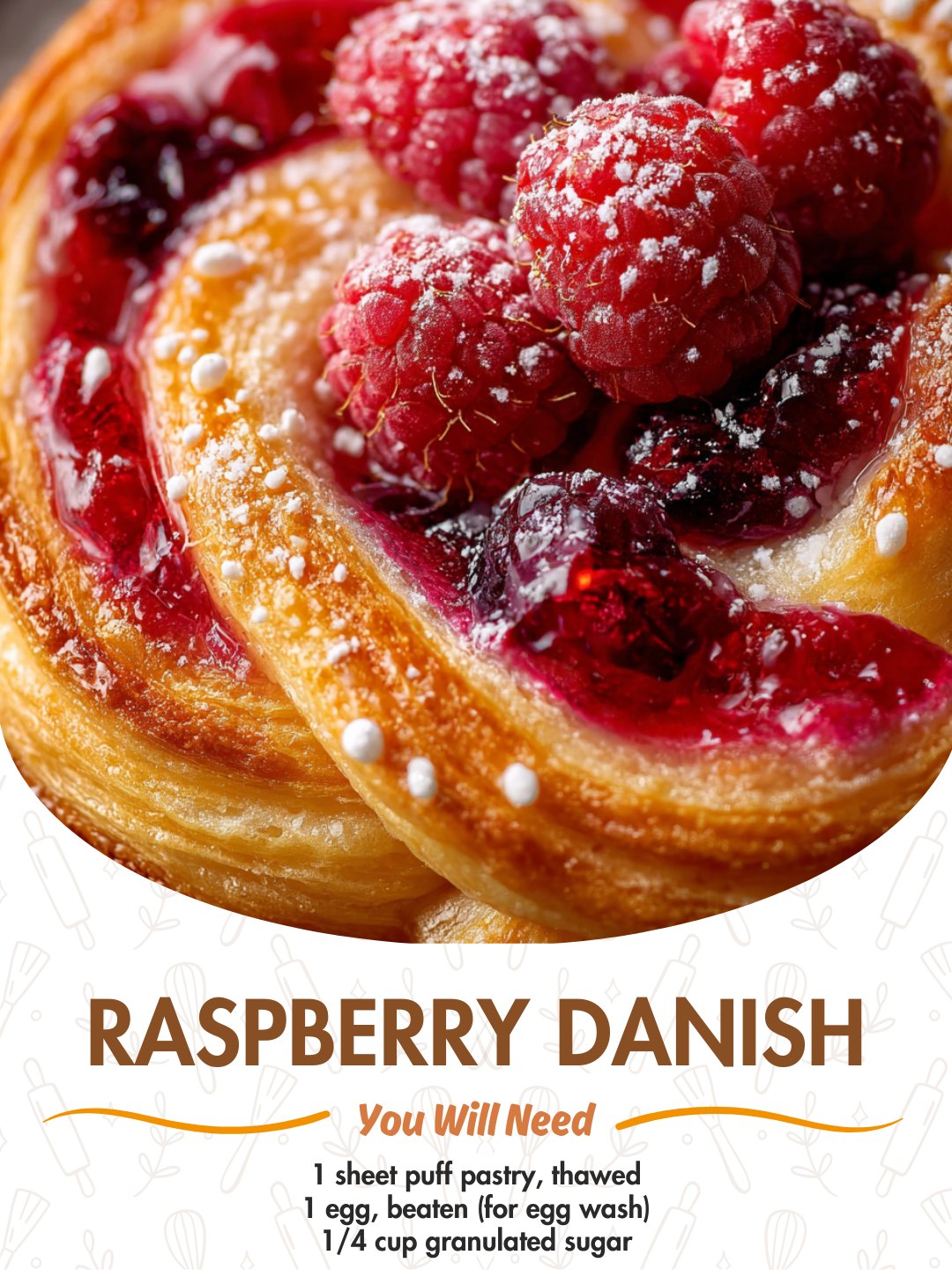
I love serving these warm, when the pastry is at its flaky peak and the filling is almost dangerously molten. A simple dusting of powdered sugar over the top is my go-to, or if I’m feeling fancy, I’ll whisk together that quick glaze of powdered sugar and milk and drizzle it in zig-zags over the cooled danishes. The contrast of the white glaze against the red jam is stunning.
For a truly decadent breakfast or brunch, I’ll plate these alongside a bowl of lightly sweetened whipped cream or a dollop of Greek yogurt. The creamy, cool tang is the perfect foil for the sweet, warm pastry. A cup of strong black coffee or a pot of Earl Grey tea completes the picture perfectly.
They also make a fantastic dessert. I’ve served them after a casual dinner with a scoop of vanilla bean ice cream melting on top. The combination of hot and cold, flaky and creamy, is absolutely heavenly. It feels indulgent and special, yet you know it took mere minutes of active work.
Variations & Customizations
The beauty of this base recipe is how easily it adapts. My favorite variation is an apple cinnamon version: I sauté thinly sliced apples with a bit of butter, brown sugar, and cinnamon until soft, then use that in place of the jam. A sprinkle of chopped pecans on top before baking adds a wonderful crunch. It tastes like autumn in pastry form.
For a citrus twist, I replace the raspberry jam with lemon curd. I’ll sometimes add a little lemon zest to the cream cheese mixture as well. The result is brilliantly bright and tangy. In the summer, I swap in a mix of fresh blueberries and a tiny sprinkle of cornstarch (to thicken their juices) for a classic blueberry danish.
Savory options work too! Skip the sugar entirely. Spread the pastry with Dijon mustard, top with grated Gruyère cheese, caramelized onions, and a few slices of ham before baking. You get the most incredible, impressive savory palmier-like treat that’s perfect for a brunch spread or appetizer.
How to Store, Freeze & Reheat
These danishes are truly best the day they are made, but if you have leftovers, let them cool completely and store them in an airtight container at room temperature for one day. The pastry will soften, but they’ll still taste great. I do not recommend refrigerating them, as it accelerates the staling process and makes the pastry chewy.
To freeze, I assemble the danishes right up to the point of baking (including the egg wash and sugar), then freeze them solid on the baking sheet before transferring to a freezer bag. They can go straight from the freezer into the preheated oven—just add 3-5 minutes to the bake time. This is my secret for having “fresh-baked” pastries ready for unexpected guests or a hassle-free morning.
For reheating, never use the microwave—it turns the pastry into a sad, rubbery mess. Instead, I pop a day-old danish into a 350°F (175°C) oven or a toaster oven for about 5-8 minutes until it’s warm and re-crisped. It brings back much of its original glory.
Conclusion
Making these Raspberry Danishes is more than just following a recipe; it’s about creating a little moment of joy and craftsmanship in your own kitchen. They look impressive, taste divine, and carry with them that wonderful sense of accomplishment. I hope you give them a try and fill your home with that wonderful, buttery, sweet aroma. Trust me, once you see them puff up in your oven, you’ll be as hooked as I am. Happy baking