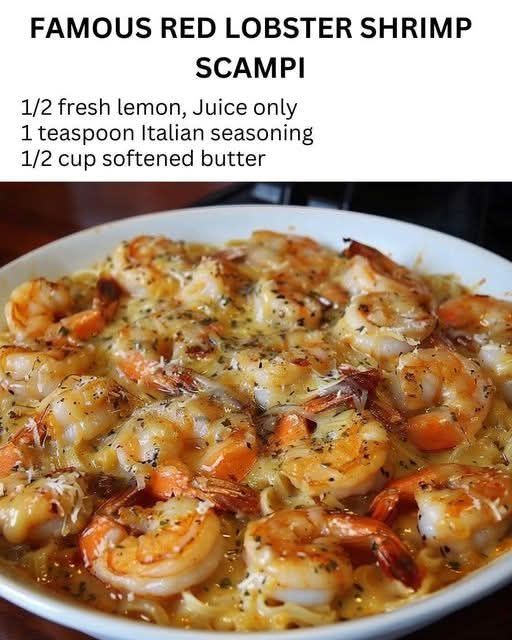
The moment I lifted the lid off the skillet, the steam that hit my face was pure, unadulterated bliss. It smelled like a fancy restaurant date night—buttery, garlicky, with that bright punch of lemon and the briny sweetness of plump shrimp. That’s the magic of recreating Red Lobster’s Shrimp Scampi in my own kitchen. I remember feeling so intimidated by it, thinking it was a “special occasion only” dish, until I realized just how simple and fast it really is to make that luxurious flavor at home. Let me show you exactly how I do it, so you can bring that feeling to your table, too.
Ingredients
- 1 lb large raw shrimp, peeled and deveined (tails on or off)
- 1/2 cup (1 stick) unsalted butter, softened
- 4-5 large cloves garlic, minced
- 1/2 cup dry white wine (like Pinot Grigio or Sauvignon Blanc)
- 1/2 fresh lemon, juice only
- 1 teaspoon Italian seasoning
- 1/4 teaspoon red pepper flakes (optional)
- Salt and freshly ground black pepper, to taste
- 2 tablespoons fresh parsley, finely chopped
- For serving: cooked pasta (like linguine), crusty bread, or over rice
Now, let’s talk ingredients. The shrimp are the star, so don’t skimp. I’ve tried this with frozen raw shrimp (thawed, of course) and fresh from the counter, and both work wonderfully—just make sure they’re raw. The garlic is non-negotiable; fresh minced makes a universe of difference compared to jarred. For the white wine, use something you’d actually drink. I once made the mistake of using a “cooking wine” and the whole sauce had a weird, salty aftertaste. Trust me, a decent bottle is key. And that softened butter? It’s crucial for creating that rich, emulsified sauce that clings to the pasta. Don’t just toss a cold stick in!
Equipment Needed
- A large skillet or sauté pan (stainless steel or non-stick)
- Tongs or a slotted spoon
- Sharp knife and cutting board
- Measuring cups and spoons
- Zester or microplane (optional, for lemon zest)
- A small bowl for pre-measuring
You don’t need fancy gear for this one, but your pan choice matters. I prefer a large stainless steel skillet because it gets a great sear on the shrimp and helps reduce the sauce beautifully. A non-stick pan works, too, especially if you’re worried about sticking. Having everything measured and prepped before you start—what chefs call mise en place—is my biggest secret. This cookes so fast that you won’t have time to juice a lemon or mince garlic while the shrimp are in the pan. I learned that the hard way and ended up with rubbery shrimp! I also keep my serving plates warm in a low oven, because this dish deserves to be served hot.
(See the next page below to continue…)