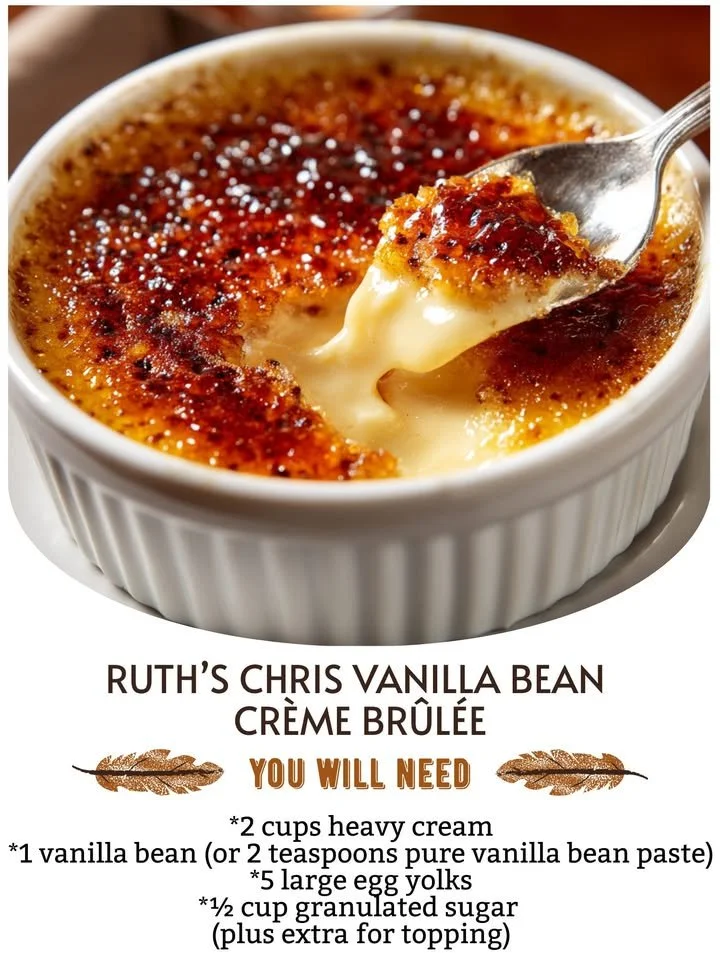
Next, I separate the egg yolks from the whites, which is always a fun task! In a large mixing bowl, I whisk the egg yolks until they blend into a smooth concoction. I slowly pour in the cooled cream mixture, whisking constantly to ensure that the yolks don’t scramble. After everything is combined, I strain the mixture through a fine-mesh sieve to catch any lumps, creating an ultra-smooth custard. Then, it’s time to pour the custard into my ramekins and place them in a baking dish filled with hot water—this water bath helps them cook evenly.
Now, it’s off to the oven! I bake the ramekins for about 30 to 35 minutes. You’ll know they’re done when the edges are set, but the centers still have a slight jiggle. Once they’re perfectly baked, I carefully remove them from the water bath and let them cool first at room temperature, then in the refrigerator for a few hours (or overnight, if I’m feeling patient). The waiting is honestly the hardest part!
Finally, the moment has come to caramelize the sugar topping! I sprinkle a thin, even layer of granulated sugar over each cooled custard, and then, using my kitchen torch, I slowly melt the sugar until it forms that delightful crispy layer. If I don’t have a torch, I’ll place them under my broiler for just a minute or two, watching carefully to make sure they don’t burn. Once cooled for a minute, it’s ready to be devoured.
Pro Tips for Best Results
One key tip I learned while perfecting this recipe is to use fresh vanilla beans whenever possible. The flavor is profoundly richer than using just vanilla extract. I experimented with both, and trust me, the beans make all the difference! They release an amazing fragrance and add those delightful little specks in the custard that look so pretty.
I also recommend allowing your crème brûlée to chill in the fridge for at least four hours, although overnight is ideal. This not only helps the flavors to meld but also allows the custard to set perfectly. I once rushed this step, and the texture ended up being too soft.
Lastly, ensure your sugar topping is even and thin. I’ve found that if it’s too thick, it doesn’t caramelize properly—it just gets gummy. A gentle, steady hand with the sugar will give you that perfect snap when you break into it!
Common Mistakes to Avoid
One common mistake I made early on was not fully dissolving the sugar in the cream mixture. If you find grains of sugar in your custard, it can lead to an unrefined texture that detracts from the overall experience. It’s key to let the cream get warm enough to dissolve those granules thoroughly.
Another issue to watch out for is overcooking the custard. If you cook it too long, the texture can turn grainy. It should be velvety and smooth, so I recommend checking it a few minutes before the suggested baking time.
I’ve also discovered that rushing the cooling process can lead to disaster. I used to pop them in the fridge right after they came out of the oven, thinking it would speed things up. However, this caused the custard to crack as it cooled too quickly.
Finally, the sugar topping is a delicate process. If a torch is not held perfectly still, it can create uneven patches or even burn in spots. Practice makes perfect! If you’re having trouble, remember a moment of patience goes a long way. (See the next page below to continue…)