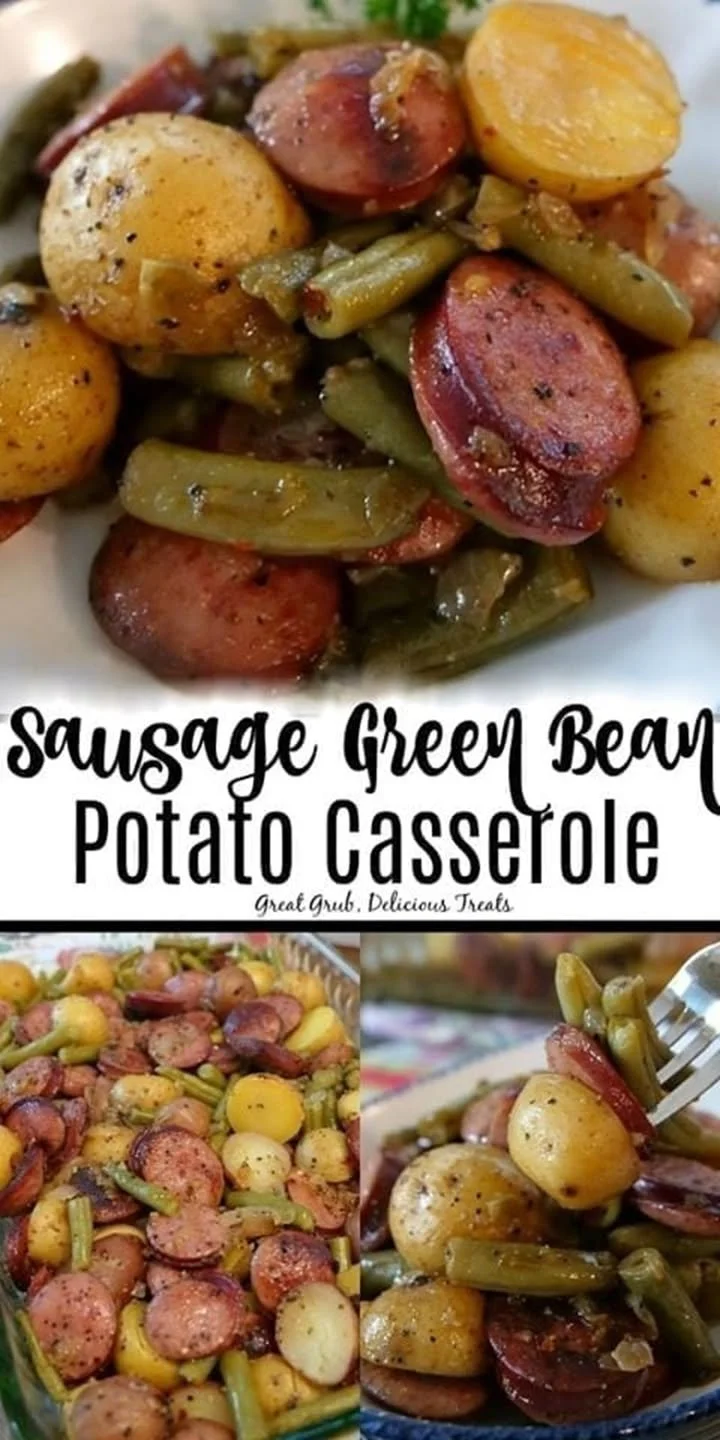
Next, to the same skillet, I toss in my chopped onion and minced garlic. I let those sauté for a few minutes until the onion is translucent and fragrant. It really adds another layer of aroma to the dish! Then I combine the cooked sausage, diced potatoes, and green beans in a large mixing bowl. I drizzle a bit of olive oil over the mixture, sprinkle with paprika, salt, and pepper, and mix everything until the veggies are well coated.
Once combined, I transfer the mixture to my greased baking dish and pour the chicken broth evenly across the top. I then cover the dish with aluminum foil and pop it in the preheated oven. After about 35 minutes, I carefully remove the foil and sprinkle the cheese on top, then return it to the oven for another 15 minutes. The cheese melts beautifully, and my mouth starts watering just thinking about digging in!
When the casserole is a golden brown and bubbly, I take it out of the oven and let it sit for a few minutes before serving. This allows the flavors to settle just right. Each bite is a warm hug on a plate!
Pro Tips for Best Results
I’ve tested this dish multiple ways, and my biggest tip is to use fresh green beans instead of frozen ones. Fresh beans have a crunch that really complements the creamy potatoes and savory sausage, while frozen can turn a bit mushy. Trust me; the texture difference is worth it.
Another thing I love is to add a bit of spice. A pinch of red pepper flakes or even some diced jalapeños gives it a fantastic kick, making it a little more exciting. It’s a small tweak that elevates the entire dish!
Lastly, don’t skip the resting time. I know it’s hard to wait when the aroma fills the air, but letting it sit for a few minutes really allows the flavors to deepen, providing an even more delightful experience when you dig in.
Common Mistakes to Avoid
One common mistake is overcooking the potatoes. I learned this the hard way after my first attempt resulted in mushy chunks! Make sure to dice them into uniform pieces and check for doneness during the baking process. They should be fork-tender but still retain some structure. (See the next page below to continue…)