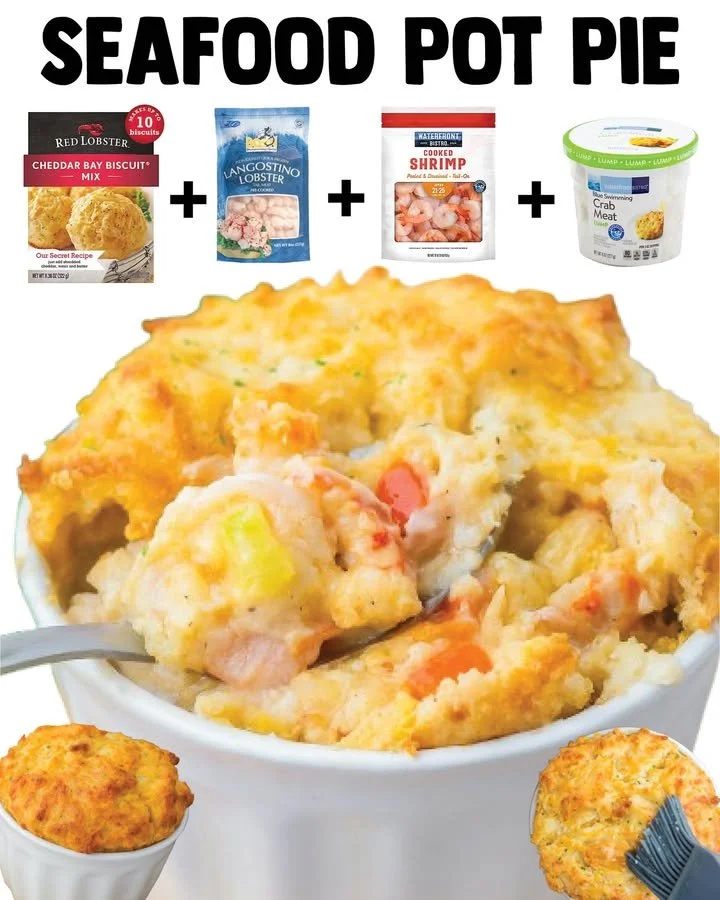
Next, I add in those delectable seafood treasures—shrimp, scallops, and fish—along with the mixed vegetables. Every time I do this, I can’t help but take a moment to appreciate the beautiful colors and textures! Then, I season our mixture with thyme, lemon juice, salt, and pepper to taste. It’s important to taste as you go; this step helps to ensure that your filling has the perfect balance of flavors. Once that’s done, I let the mixture cool slightly while I prepare my crust.
On a floured surface, I roll out one of the pie crusts and fit it into my baking dish, allowing some overhang. I carefully pour the seafood filling into the crust, which looks so appetizing at this point. Then, I roll out the second pie crust and place it over the filling. I make sure to seal the edges well and cut a few slits in the top crust for that beautiful golden-brown finish. It’s truly satisfying to see it all come together!
Finally, I pop it into a preheated oven at 400°F (200°C) and let it bake for about 30-35 minutes, until the crust is golden and flaky. The aroma that fills the air during this time is simply incredible, making it hard to wait for the perfect moment to serve it!
Pro Tips for Best Results
When I first started making seafood pot pie, I experimented with different types of seafood. My favorite combo ended up being shrimp and scallops—both offer distinct flavors and textures that complement each other beautifully. Don’t be afraid to mix it up with whatever fresh seafood you can find at your local market!
I also found that letting the filling cool before adding it to the pie crust is crucial. If the filling is too hot, it can make the crust soggy, and nobody wants a soggy bottom pie! Cooling for just a few minutes helps keep that crust nice and crisp.
Lastly, if you can, make your own pie crust. It’s easier than you think and gives an incredible flavor boost. I tested this three ways, and trust me, the homemade crust is the way to go for that extra piece of warmth and comfort.
Common Mistakes to Avoid
One common mistake I made when first trying this dish was overcooking the seafood. I learned the hard way that seafood can go from perfectly tender to rubbery in just a few moments. The key is to add your seafood toward the end of the cooking process, as it will continue cooking in the oven.
Another error is skipping the seasoning. Since seafood is a delicate flavor, it can get lost without proper seasoning. A pinch of salt, lemon juice, and a good dose of herbs make all the difference, so be generous!
I also used to rush through the sealing of the crust edges, thinking it didn’t matter. But allowing those edges to seal properly means a beautifully contained filling that doesn’t leak everywhere during baking. So, take your time with this step!
Lastly, I often underbaked my pot pie because I thought it was done when the crust started to brown. The filling needs time to bubble and become all the more delicious, so don’t shy away from putting it back in the oven if necessary. Trust the process! (See the next page below to continue…)