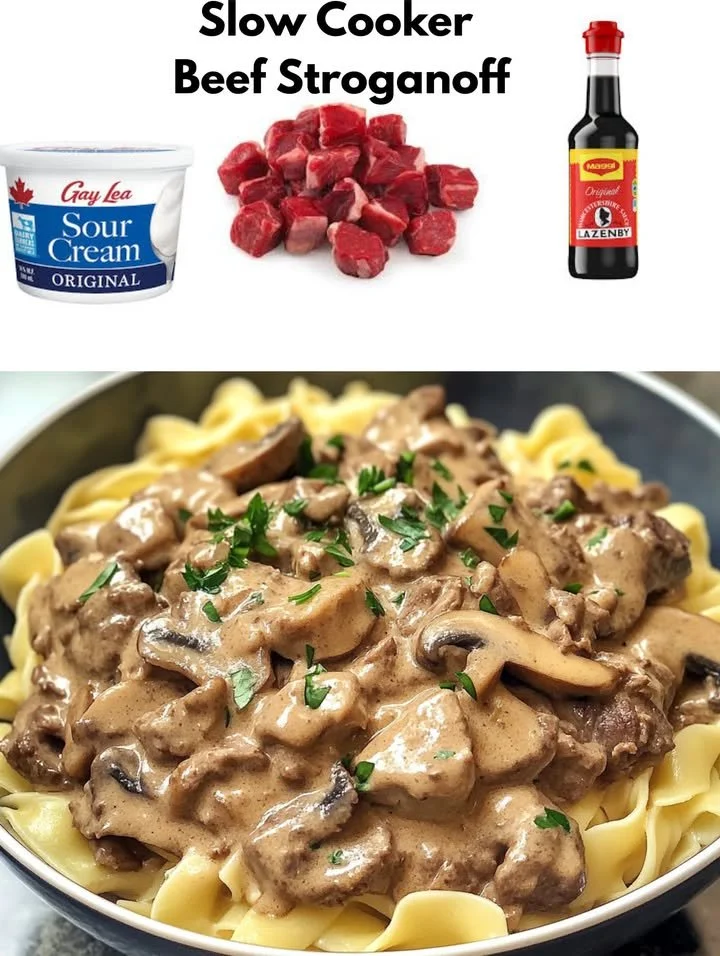
Once that’s all set, I cover the slow cooker and let it work its magic on low for about 6 to 8 hours. If I’m in a hurry, I can cook it on high for about 3 to 4 hours, but I always find the low setting creates a richer flavor. About 30 minutes before I’m ready to serve, I mix the sour cream and flour together in a bowl to create a creamy base. I then stir this mixture into the slow cooker, letting it thicken up beautifully. The moment you take the lid off, the smell hits you—creamy, meaty, and oh-so-inviting!
When the timer goes off, I prepare my egg noodles or rice as a base for the stroganoff. The beef should be fork-tender, and the sauce should be thick and luscious. I give everything a good stir and serve it up in bowls topped with a sprinkle of fresh parsley for color. The first bite is pure bliss; the flavors are warm and comforting.
Pro Tips for Best Results
I’ve tested this recipe three ways to find the sweet spot for flavor, and here’s what I discovered: browning the beef first makes a world of difference. It adds an extra layer of depth that you won’t want to skip! Additionally, I’ve found that using a good-quality beef broth elevates the dish even more. Don’t be shy about tasting and adjusting seasoning during the cooking process; everyone’s palate is different!
Another little secret I’ve learned is that you can substitute or add in different mushrooms if you want to mix things up a bit. I like to use a combination of cremini and button mushrooms; the more flavor, the better! And remember, the longer it simmers, the more tender your meat will be. So if you’re not in a rush, let it slow-cook all day!
Lastly, I always keep extra sour cream on hand for serving. It adds a wonderful coolness and richness that pairs perfectly with the warm stroganoff. You can never have too much creamy goodness, right?
Common Mistakes to Avoid
One mistake I made early on was using tough cuts of beef, thinking they would break down during cooking. I learned that chuck roast or labeled beef stew meat works best since it’s more tender after slow cooking. If you use a tougher cut, you might end up with chewy pieces instead of melt-in-your-mouth goodness. (See the next page below to continue…)