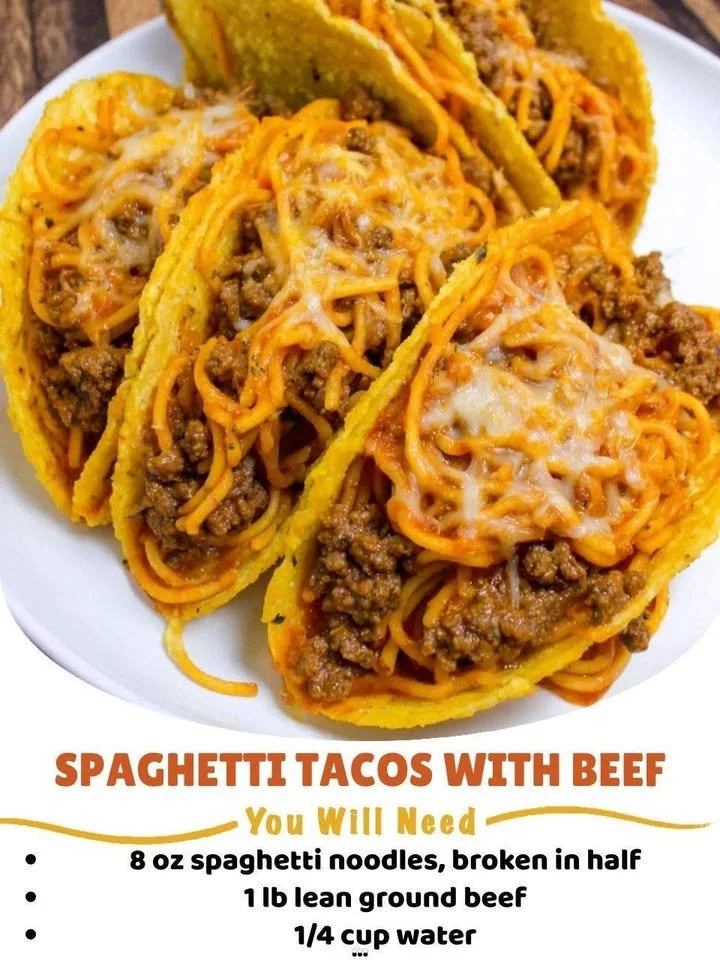
Next, you’ll want to combine your cooked spaghetti with the meat mixture in the skillet. Turn the heat down to low, and give it a good toss until the spaghetti is evenly coated and everything is heated through. You’ll see how easily the spaghetti absorbs those delicious flavors! While that’s coming together, prepare your taco shells according to package directions—whether you’re warming soft tortillas or crisping up hard shells, the choice is all yours!
Once your taco shells are ready, it’s time for the fun part—assembly! Spoon the spaghetti mixture into each taco shell generously. Don’t be shy; pile it high! After that, I like to add a sprinkle of shredded cheese on top, followed by some shredded lettuce and diced tomatoes. You can even add a dollop of sour cream and salsa for a refreshing kick. Find a cozy spot at the table and get ready for a flavor explosion in every bite!
Pro Tips for Best Results
I tested this recipe three ways to make sure it was just right! The first time, I used only taco seasoning, and while it was good, I found that adding marinara sauce introduced a lovely depth of flavor. The second time I made these, I opted for whole wheat spaghetti, and the whole family loved the subtle nuttiness it brought to the dish! My final tip—let the kids help fill the tacos. It transforms dinner into a fun activity, making them more excited to eat what they helped create!
When it comes to the flavor payoff, I recommend not skimping on the toppings. A few slices of avocado or jalapeños can take the experience to the next level. Don’t forget fresh cilantro; it adds a bright note to balance the richness of the meat and cheese.
Finally, never underestimate the power of a squeeze of lime! Just before taking a bite, a little lime over the top can elevate the flavors, making every mouthful taste vibrant and fresh.
Common Mistakes to Avoid
One common mistake I made on my first attempt was overcooking the spaghetti. Overcooked pasta becomes mushy and doesn’t hold up in the taco shell, leading to a less-than-ideal texture! Now, I always aim for al dente spaghetti that has a bite to it; it holds up much better in the tacos. (See the next page below to continue…)
Another pitfall is not letting the meat drain properly after browning. If there’s too much grease left, it can make the filling greasy and unappetizing. I recommend taking that extra moment to let the meat rest in the colander.
One thing I initially overlooked was the importance of mixing the marinara sauce and taco seasoning well. It’s so easy to forget to stir it thoroughly, but ensuring it’s well blended makes a huge difference in the final flavor.
Lastly, don’t be afraid to experiment. While I’ve shared my favorite way to prepare these spaghetti tacos, I fondly remember the first time I tried adding black beans to the filling, and it was a game-changer!