Equipment Needed
- 9-inch round cake pan
- Parchment paper
- Electric hand mixer or stand mixer
- Two mixing bowls (one medium, one large)
- Whisk
- Rubber spatula
- Zester or fine grater
- Citrus juicer
- Wire cooling rack
- Small bowl for glaze
Step-by-Step Instructions
The magic starts with proper prep. I line my cake pan with a round of parchment paper and give it a light butter-and-flour coating—this guarantees a clean release every single time. I also make sure to zest and juice my lemons first, getting that messy task out of the way. Then, in a medium bowl, I whisk together the flour, baking powder, baking soda, and salt. In a separate small bowl, I gently toss those beautiful quartered strawberries with the single tablespoon of flour until they’re lightly coated. This little dance might seem trivial, but it’s the step that ensures you get berries suspended throughout the cake, not just a layer at the bottom.
Now, for the creaming. I beat the softened butter and sugar together on medium-high speed for a full 3 to 4 minutes. Don’t skimp here! You want it to become noticeably pale, fluffy, and almost creamy. This incorporates air, which is your leavening friend. Next, I add the eggs one at a time, beating well after each addition until fully incorporated. Then comes the flavor party: I mix in the vanilla, lemon zest, and lemon juice. The batter might look a little curdled at this point—that’s perfectly okay because of the lemon juice. I’ve learned not to panic; the dry ingredients will bring it all together.
Here’s where we marry everything. With the mixer on low speed, I add about a third of the dry ingredients, followed by half of the buttermilk. I repeat, ending with the final third of the flour mixture. I stop mixing the second the last streaks of flour disappear. Overmixing is the enemy of a tender cake! Finally, I fold in the flour-dusted strawberries with a gentle hand using a rubber spatula, being careful not to crush them. I spread the thick, speckled batter into my prepared pan, smoothing the top.
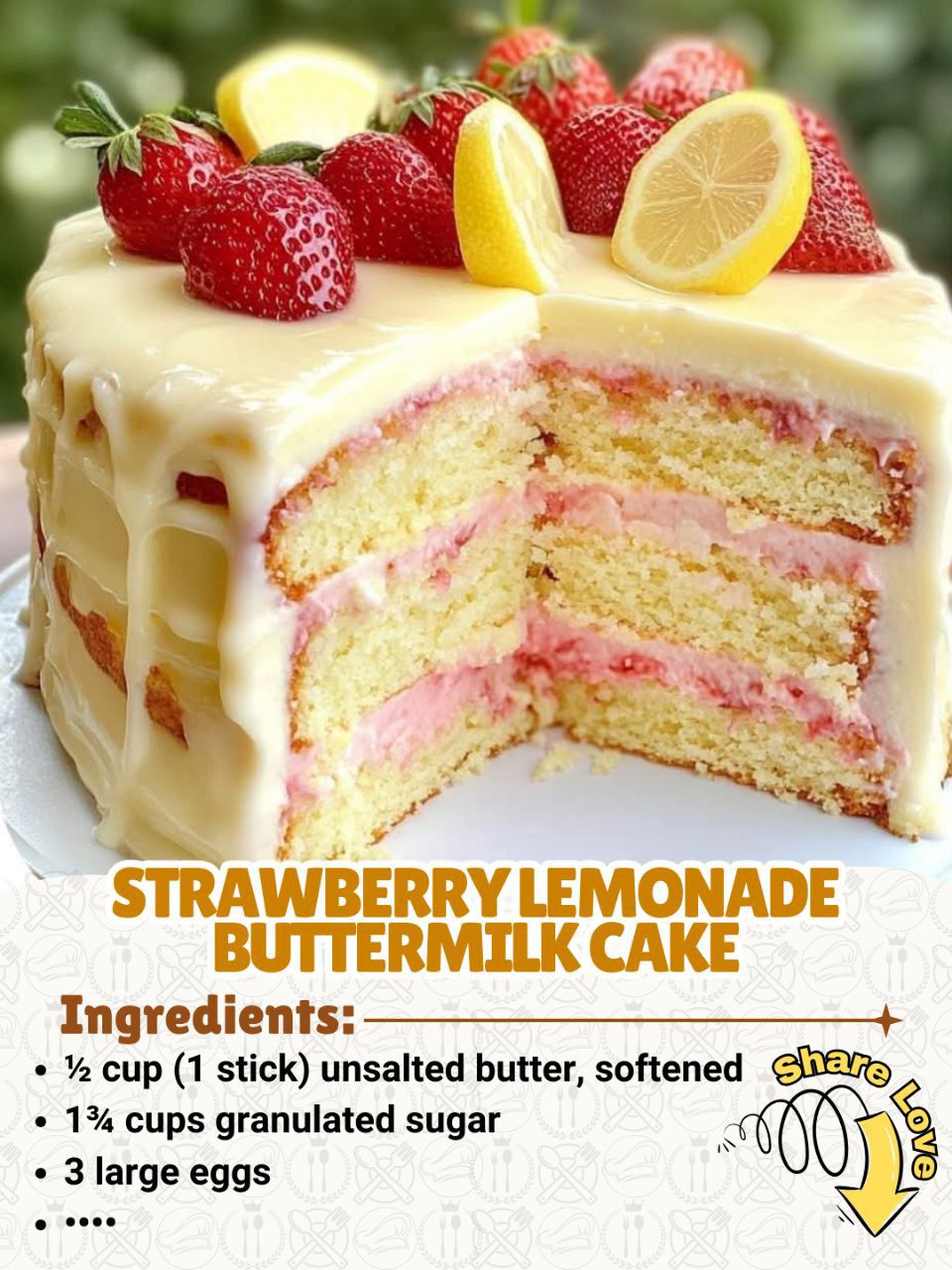
Baking is an act of patience. I place the pan in the center of a preheated 350°F (175°C) oven and set my timer for 45 minutes. I start checking for doneness then—a toothpick inserted into the center should come out with a few moist crumbs, but no wet batter. In my oven, it usually takes 50-55 minutes. The top will be a gorgeous golden brown, and the scent will be utterly divine. I let the cake cool in the pan on a wire rack for 20 minutes before carefully inverting it, peeling off the parchment, and letting it cool completely. Once cool, I whisk together the simple lemon glaze and drizzle it artfully over the top.(See the next page below to continue…)