Pro Tips for Best Results
I tested the rice method three different ways. Adding uncooked rice made the soup far too thick and starchy. Adding it with the broth made it mushy. The winner, without a doubt, is cooking the rice separately and stirring it in at the very end. It maintains a perfect, distinct texture and prevents the soup from turning into a stew overnight. Do this one thing, and you’ll thank me later.
Brown your beef properly. Don’t just gray it; let it get some good, dark caramelization in spots. That’s called the Maillard reaction, and it’s the secret to a deeply flavorful soup base. I resist the urge to stir it constantly, letting it sit for a minute or two to develop those tasty browned bits on the bottom of the pot.
Let the soup rest off the heat for about 10 minutes before serving. I know it’s tempting to dive right in, but this short wait allows the flavors to marry even more completely and brings the temperature to the perfect, spoon-ready warmth. It also gives you time to set the table and gather your garnishes.
Common Mistakes to Avoid
The first time I made this, I got overzealous with the salt early on. Remember, both the canned tomatoes and the broth contain sodium, and the soup reduces as it simmers. I learned the hard way—season in layers. Add a little salt when browning the meat, then wait until the very end, after simmering, to do your final major seasoning. You can always add more, but you can’t take it out.
Don’t skip the fresh garlic or use jarred minced garlic if you can help it. I’ve tried both, and the bright, pungent kick of freshly minced garlic makes a noticeable difference in building a complex flavor profile. That one extra minute of mincing is absolutely worth it for the aromatic payoff it delivers throughout the entire pot of soup.
Serving Suggestions
I love serving this soup in deep, wide bowls with a side of crusty, buttered bread or fluffy garlic knots for dipping. There’s something so satisfying about using the bread to catch every last drop of the rich broth. It turns a simple soup into a truly hearty, hands-on meal.
For a lighter pairing, a simple green salad with a sharp vinaigrette is my go-to. The crisp, acidic bite of the salad cuts through the richness of the soup beautifully. I usually toss together some romaine lettuce, sliced red onion, and cucumbers with a basic lemon-Dijon dressing right before we sit down to eat.
When I’m feeding a crowd or want a full comfort-food spread, I’ll pair it with a side of roasted broccoli or green beans. The caramelized, slightly crispy veggies add a nice textural contrast and make the whole meal feel even more nourishing and complete.
Variations & Customizations
This soup is a fantastic canvas. I’ve made a wonderful Italian-inspired version by using sweet Italian sausage (casings removed) instead of ground beef, and adding a pinch of red pepper flakes and a tablespoon of chopped fresh basil at the end. It’s a completely different, but equally delicious, direction.
For a lower-carb or grain-free option, you can easily swap the white rice for cauliflower rice. My trick is to add the fresh or frozen riced cauliflower about 10 minutes before the end of the simmering time so it cooks through but doesn’t get soggy. It’s a great way to pack in more veggies without sacrificing heartiness.
I’ve seen friends add a can of drained and rinsed kidney beans or black beans for extra fiber and protein, which is a fantastic idea. You could also stir in a couple of handfuls of fresh spinach right at the end of cooking, letting it wilt in the residual heat. It adds a pop of color and nutrients.
How to Store, Freeze & Reheat
This soup stores beautifully, making it perfect for meal prep. Once completely cooled, I transfer it to airtight containers. It will keep in the refrigerator for up to 4 days. A note from experience: store the rice separately if you can, as it will continue to absorb liquid. If it’s already mixed in, just add a splash of broth or water when reheating to loosen it up.
To freeze, I portion the fully cooled soup (without garnishes) into freezer-safe bags or containers, leaving about an inch of space for expansion. It freezes perfectly for up to 3 months. To reheat, I thaw it overnight in the fridge and then warm it gently on the stovetop over medium-low heat, stirring occasionally. You can also reheat it from frozen in a pot over low heat with a little extra broth, but it will take longer and require more frequent stirring to prevent scorching.
Conclusion
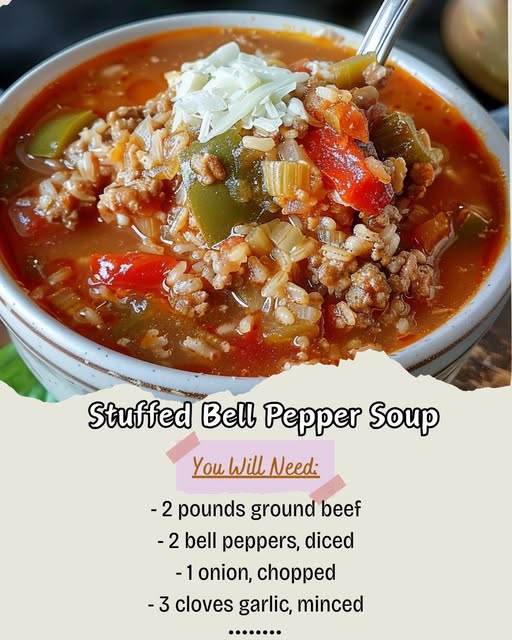
This Stuffed Bell Pepper Soup is more than just a recipe to me; it’s a bowlful of comfort, a time-saver on hectic evenings, and a guaranteed smile from my family. It proves that you don’t need complicated techniques to create something truly delicious and nourishing. I hope it finds a cozy spot in your recipe rotation and brings as much warmth to your table as it has to mine. Now, go grab your pot—I can’t wait for you to experience it. Happy cooking