Pro Tips for Best Results
The temperature of your ingredients truly matters. I tested this with cold water straight from the tap once, and my dough took forever to rise. Using accurately warm water (110°F) wakes the yeast up perfectly and gets the fermentation going quickly, leading to a better rise and more complex flavor in your crust. A simple kitchen thermometer is a small investment for huge payoff. Also, when kneading, don’t be tempted to add too much flour. A slightly tacky dough creates a more tender, airy crust than a dry, stiff one.
For the ultimate flavor boost, I brush the finished, hot crust with a simple garlic-infused olive oil. As soon as the pizza comes out of the oven, I mix a tablespoon of olive oil with a small minced garlic clove (or a pinch of garlic powder in a pinch) and use a pastry brush to paint it onto the golden-brown stuffed edge. It adds a professional, aromatic finish that makes the crust irresistible. It’s a tiny step with a massive return on deliciousness.
My final pro tip is about the bake. If you have a pizza stone or steel, preheat it for an hour and bake your pizza on it (with the parchment underneath for easy transfer) for an even crisper bottom crust. If you’re using a standard pan like I often do, placing it on the lowest oven rack for the last 3-4 minutes of baking can help crisp up the bottom perfectly. Every oven is different, so don’t be afraid to get to know its hot spots.
Common Mistakes to Avoid
The most common mistake I see—and one I absolutely made the first time—is overloading the pizza with sauce and toppings. It seems like a good idea, but a heavy hand leads to a soggy center that never fully cooks. You want a thin, even layer of sauce, just enough to cover the dough, and a moderate amount of cheese. The pepperoni should be in a single layer. Think of it as a delicate balance, not a mountain. A leaner pizza bakes more evenly and allows each component to shine.
Another critical error is not letting your dough proof properly, either by skipping the initial rise or by not giving the shaped pizza a brief second rest. After I shape the dough on the pan and create the stuffed crust, I let the whole thing sit for 10-15 minutes before adding toppings and baking. This “final proof” relaxes the gluten, which prevents the crust from shrinking back and becoming tough in the oven. I skipped this once and my crust was oddly chewy and tight. A little patience here ensures a light, airy, perfectly textured bite.
Serving Suggestions
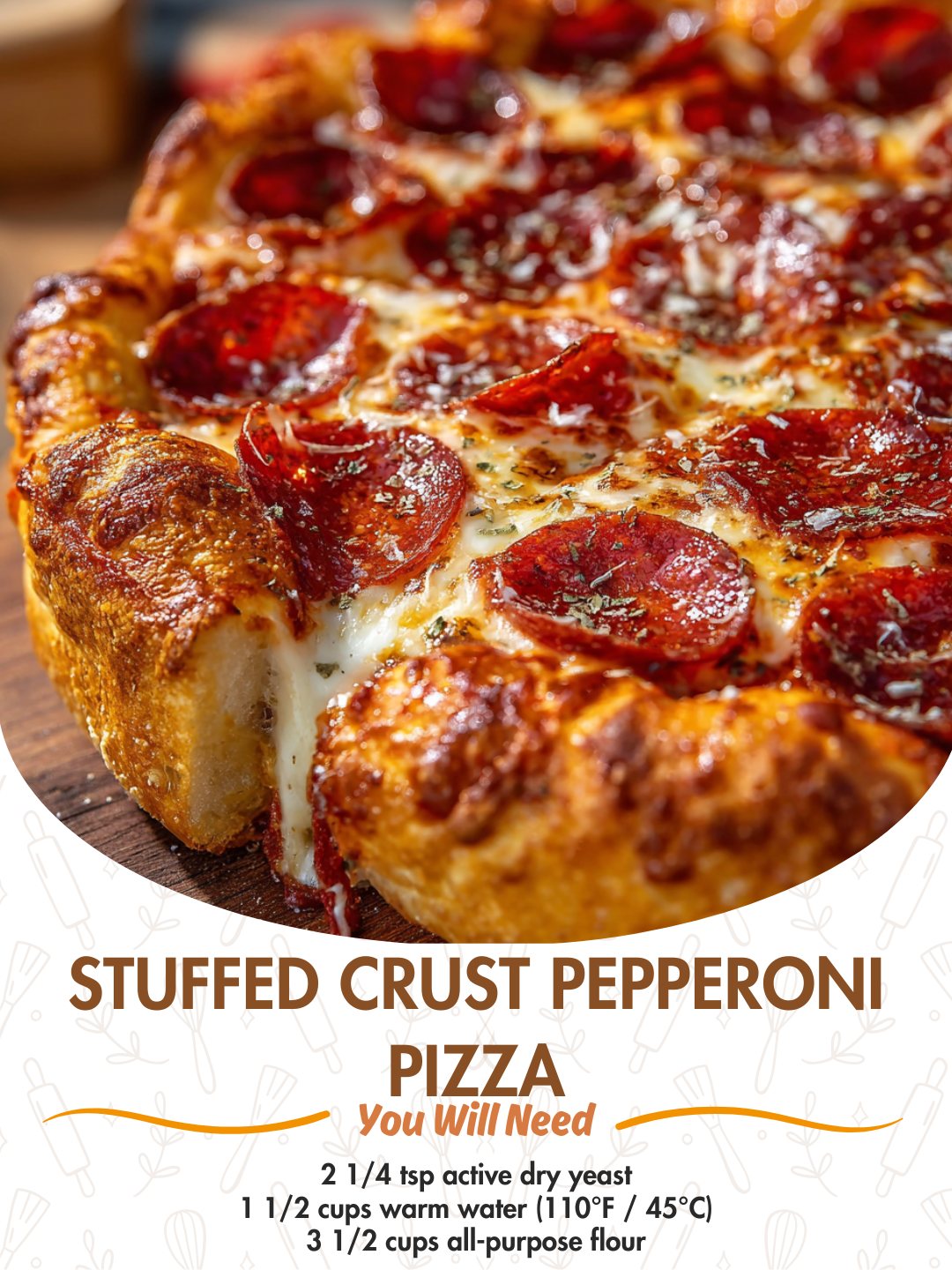
I like serving this pizza straight from the oven, placed right in the center of the table on a large cutting board. The drama of slicing into that gooey, stuffed edge is part of the experience. For my family, it’s a knife-and-fork affair for the first molten-hot minute, then quickly devoured by hand. I always have a small bowl of crushed red pepper flakes and a shaker of extra Parmesan on the side for those who want an extra kick.
To cut through the richness, a simple, crisp side salad is my perfect pairing. I’ll often toss together some romaine hearts, thinly sliced red onion, a few black olives, and a sharp, lemony vinaigrette. The acidity and crunch are the ideal counterpoint to the fatty, savory pizza. It makes the meal feel complete and balanced, even on a cheat day.
For a true weekend feast or game-day spread, I turn this into a build-your-own pizza bar. I’ll prepare the dough and stuffed crust base, then set out small bowls of different toppings: sautéed mushrooms, sliced bell peppers, cooked Italian sausage, extra pepperoni, and even some ricotta for dolloping. It’s a fantastic, interactive way to feed a crowd and lets everyone create their perfect slice from the masterpiece foundation.
Variations & Customizations
This recipe is a wonderfully adaptable canvas. One of my favorite variations is a “Supreme” style. I’ll scatter thinly sliced green bell pepper, red onion, and black olives over the pepperoni, and maybe add some crumbled cooked Italian sausage. The key is to keep the veggie slices very thin so they cook through in the high heat without releasing too much water. Another winner is a “BBQ Chicken” version: I swap the pizza sauce for your favorite BBQ sauce, use a mix of mozzarella and smoked Gouda, and top with shredded cooked chicken and thinly sliced red onion before baking.
For a meat-lover’s dream, I’ve layered in cooked, crumbled spicy Italian sausage and chopped bacon or pancetta with the pepperoni. It’s decadent and delicious, though I’d recommend going even lighter on the sauce here to compensate. Conversely, for a veggie-forward pie, I love a combination of roasted garlic spread instead of red sauce, then topped with a mix of sautéed spinach, artichoke hearts, and roasted red peppers, finishing with mozzarella and goat cheese crumbles after baking.
You can even play with the stuffed crust itself. While string cheese mozzarella is the classic, I’ve had great success stuffing it with a combination of mozzarella and a mild cheddar for a sharper flavor. For a truly over-the-top experience, brushing the stuffed crust with butter and rolling it in a mixture of grated Parmesan and garlic powder before baking creates a crackly, cheesy, crazy-good exterior. The possibilities are as broad as your cravings.
How to Store, Freeze & Reheat
Leftovers? They’re rare in my house, but if you have them, let the pizza cool completely, then store slices in an airtight container in the fridge for up to 3 days. For reheating, the microwave will make the crust soggy. Trust me, do not use the microwave. My method is to reheat slices in a dry skillet over medium-low heat. Cover the skillet with a lid for a minute or two to melt the cheese through, then uncover to let the bottom re-crisp. It works like a charm. You can also use a toaster oven or a conventional oven at 375°F until warmed through.
This pizza freezes beautifully either before or after baking. To freeze unbaked, assemble the pizza (with stuffed crust) on a parchment-lined pan, freeze solid, then wrap tightly in plastic and foil. You can bake it straight from frozen, adding 5-7 minutes to the bake time. To freeze baked slices, let them cool, flash-freeze on a tray, then bag them. Reheat frozen slices in a 400°F oven or toaster oven until hot and crisp. Having a homemade stuffed crust pizza at the ready in your freezer is a gift to your future self.
Conclusion
Mastering this Stuffed Crust Pepperoni Pizza in my own kitchen was more than just learning a recipe; it was reclaiming a little bit of that Friday night magic we usually outsource. It’s a process filled with sensory joys—the smell of yeast blooming, the feel of elastic dough, the sound of a bubbling cheese—that culminates in the pure, shared happiness of a perfect slice. I hope this recipe brings as much fun, flavor, and fulfillment to your table as it has to mine. Now, go preheat that oven, and get ready for the best pizza pull of your life. You’ve got this.