Pro Tips for Best Results
My first attempt taught me that texture is everything here. To get the rice perfect, let it rest, covered and off the heat, for 5 minutes after cooking before you fluff it. This lets the grains firm up just enough so they stick together for the stack but aren’t mushy. I’ve tested this three different ways, and that rest period is the key to a stack that stands tall without being gummy.
Another tip I learned the hard way concerns the shrimp. Do not overcrowd the skillet. If you dump all the shrimp in at once, they’ll steam instead of sear, and you’ll miss out on those delicious, caramelized bits in the pan that flavor the sauce. I cook them in two batches if my skillet isn’t big enough. It feels like an extra step, but it takes only an extra minute and makes a monumental difference in flavor and texture.
Finally, have all your components prepped and ready before you start cooking. This is a fast-paced dish once you hit the stove. Having your pineapple chopped, ginger grated, and sauce measured means you can focus on the cooking process without burning your garlic (a mistake I’ve made more than once). It turns what could be a stressful dinner rush into a smooth, enjoyable experience.
Common Mistakes to Avoid
The biggest mistake I made the first time was using minute rice or pre-cooked rice. Don’t do what I did! The texture was all wrong—it couldn’t absorb the flavors of the broth and soy sauce properly and fell apart when I tried to stack it. You need a standard long-grain white rice or jasmine rice that will cook in the liquid and become infused with flavor. That liquid-to-rise ratio is perfected for this dish.
Another common pitfall is over-saucing the shrimp. When you add the teriyaki glaze back to the skillet, it should just coat the shrimp, not drown them. If you have too much liquid, let it reduce for another minute before adding the shrimp back. A glazed, sticky shrimp is the goal, not a shrimp swimming in a pool of sauce. That concentrated glaze is what makes each bite so powerful and delicious.
Serving Suggestions
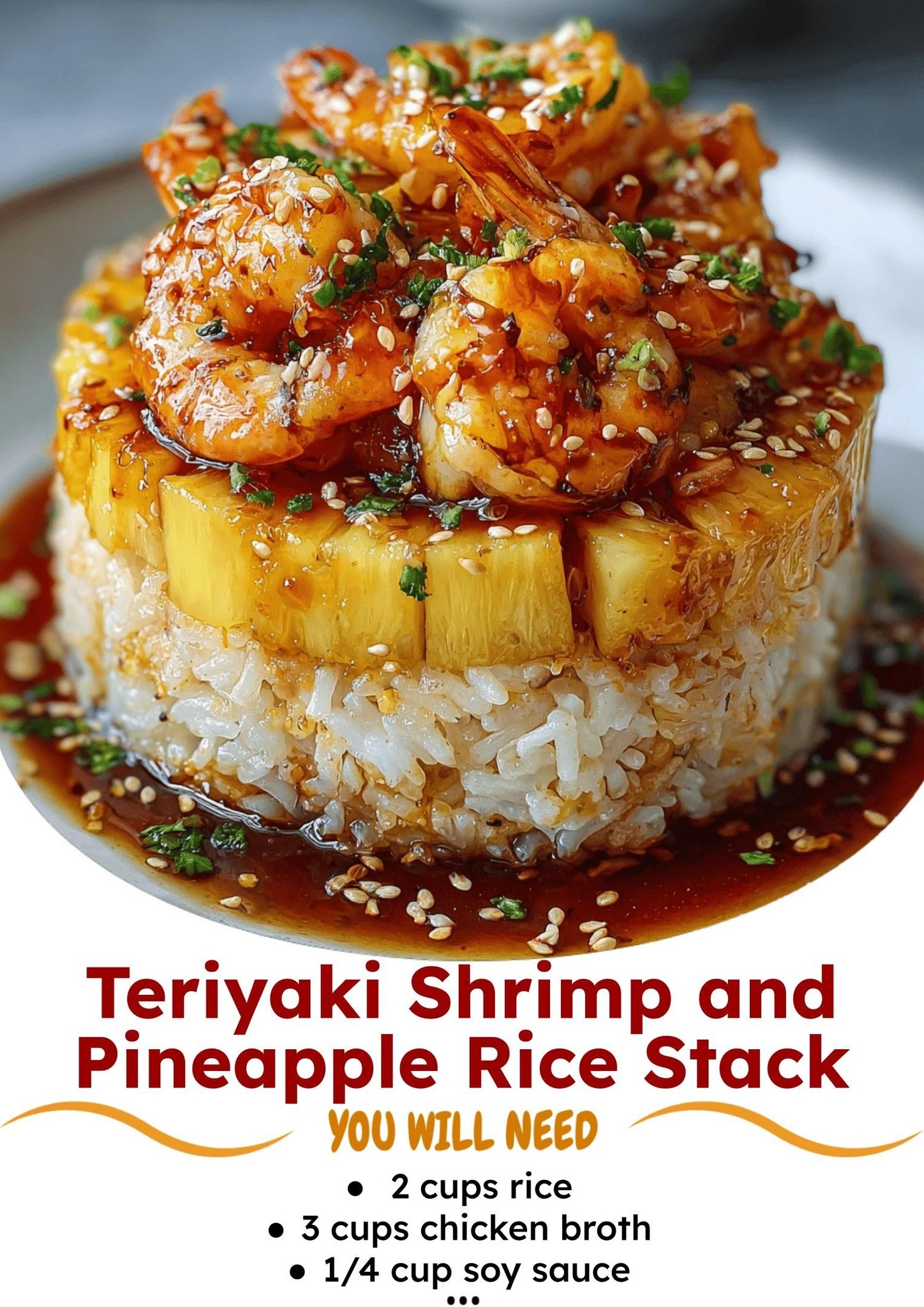
I love serving this rice stack as the absolute star of the plate. It’s so visually striking on its own that I usually keep sides simple. A light, crisp Asian cucumber salad or a quick mix of shredded cabbage with a rice vinegar dressing is my go-to. The cool, acidic crunch is the perfect counterbalance to the sweet and savory richness of the stack.
For a more substantial meal, especially if I’m feeding hungry guests, I’ll add a side of simply steamed or sautéed broccoli or snap peas. They’re fantastic for soaking up any extra teriyaki glaze left on the plate. I sometimes drizzle a little extra sauce or a bit of spicy sriracha mayo around the plate for dipping, too.
Presentation is part of the fun here. I like to serve each person their own individual stack. It feels special and personalized. A final sprinkle of sesame seeds and a thin slice of lime on the side for squeezing adds that last professional touch that always gets “oohs” and “aahs” from the table.
Variations & Customizations
This recipe is wonderfully adaptable. Not a shrimp fan? I’ve made this with cubed chicken breast or even firm tofu. For chicken, I cook it through in the skillet first, then proceed with the sauce step. For tofu, use extra-firm, press it well, and pan-fry it until golden before glazing. The method remains beautifully consistent.
You can also play with the rice. I’ve swapped in brown rice for a nuttier, whole-grain version—just adjust the liquid and cooking time according to the package directions. For a vibrant twist, I once stirred in a handful of chopped cilantro and a squeeze of lime to the rice at the end, which gave it a fantastic fresh kick that paired wonderfully with the pineapple.
The sauce is your canvas, too. If you’re feeling ambitious, whisk together your own teriyaki with soy sauce, honey, ginger, and a touch of cornstarch slurry. I’ve also added a tablespoon of smooth peanut butter to the sauce for a Thai-inspired peanut teriyaki twist—it was decadent and delicious. A teaspoon of chili-garlic paste can bring the heat if that’s your preference.
How to Store, Freeze & Reheat
For storing leftovers, I keep the components separate if possible. The rice and shrimp each go into their own airtight containers in the fridge for up to 2 days. The rice does dry out a bit, so when reheating, I sprinkle a teaspoon of water over it before microwaving it covered. The shrimp I reheat very gently in a skillet with a tiny splash of water or broth to loosen the glaze without overcooking them.
I do not recommend freezing the fully assembled dish. The cooked shrimp can become rubbery, and the rice turns unpleasantly grainy upon thawing. However, you can freeze the teriyaki sauce separately! I’ll sometimes make a double batch of the sauce and freeze it in an ice cube tray. Then, I have perfect, portioned flavor cubes ready to melt into a skillet for a super-quick future meal.
Conclusion
This Teriyaki Shrimp and Pineapple Rice Stack has become more than just a recipe in my home—it’s a little ritual of creating something beautiful and bursting with flavor. It proves that with a few smart tips and a sense of fun, you can turn simple ingredients into a meal that feels like a true occasion. I hope you give it a try and that it brings as much joy to your table as it has to mine. Happy cooking