If you want an even richer, deeper flavor, try this trick I learned on my third test: after removing the seared chicken, add a tablespoon of butter to the pan and let it melt with the garlic. Then, sprinkle in a tablespoon of all-purpose flour and cook for a minute to make a quick roux before adding the broth. This thickens the sauce more robustly and gives it a wonderful, hearty base. It’s a simple extra step that elevates the whole dish.
Common Mistakes to Avoid
A big mistake I made the first time was using cold chicken straight from the fridge. When cold meat hits a hot pan, it can seize up and cook unevenly. Now, I let my seasoned chicken sit on the counter for about 15-20 minutes before searing. It takes the chill off and leads to a much better, more consistent sear. Also, don’t skimp on the preheating time for your skillet. A properly hot pan is what gives you that restaurant-quality color and lock-in of juices.
Another common pitfall is overcooking the chicken in the oven. Since it’s already seared, it doesn’t need long to finish. I use an instant-read thermometer and pull it out the second it hits 165°F in the thickest part. Remember, it will continue to cook a little from residual heat while it rests. Overcooked chicken breasts are the quickest way to a dry, disappointing meal, so that thermometer is your best friend here. Trust me, it’s a small investment for perfect results every single time.
Serving Suggestions
I love serving this smothered chicken straight from the skillet at the dinner table—it’s a real showstopper. For the ultimate Texas Roadhouse-inspired meal, I always pair it with a big, hearty baked potato to soak up all that extra cheesy sauce. A side of buttery corn or crisp green beans balances the richness perfectly. The creamy, decadent sauce is the star, so you want sides that complement it without competing.
On busy weeknights, I keep it simple with a pile of fluffy white rice or egg noodles, which are fantastic for catching every last drop of sauce. A simple side salad with a sharp vinaigrette is my go-to for cutting through the richness and adding a fresh crunch. No matter what you choose, this is a hearty, satisfying meal that feels special without requiring special occasion effort.
Variations & Customizations
This recipe is wonderfully adaptable! If you love a little heat, swap the Monterey Jack for Pepper Jack cheese and add a pinch of cayenne to the chicken seasoning. I’ve done this for friends who like it spicy, and it was a huge hit. You can also add about ½ cup of thinly sliced onions or mushrooms to the skillet after searing the chicken. Sauté them until soft before adding the garlic—they add a lovely depth and texture to the sauce.
For a different protein, I’ve successfully made this with boneless, skinless chicken thighs. They’re more forgiving and stay incredibly juicy. Just increase the initial searing time by a minute or two per side since thighs are often thicker. I’ve even seen a friend use pork chops with great success! The basic method of sear, make a pan sauce, and finish in the oven is a fantastic template you can play with.
How to Store, Freeze & Reheat
Leftovers keep beautifully! Let the chicken and sauce cool completely, then store in an airtight container in the refrigerator for up to 3 days. When reheating, I strongly recommend using the oven or a toaster oven (at 350°F) until warmed through. The microwave can work in a pinch, but it often makes the sauce separate and the chicken rubbery. If the sauce seems a little thick after chilling, stir in a splash of chicken broth while it reheats to bring it back to life.
You can also freeze this dish for up to 2 months. I assemble it completely—with the sauce and cheese—in a freezer-safe baking dish, wrap it tightly in plastic wrap and then foil. Thaw it overnight in the fridge before baking. You may need to add a few extra minutes to the baking time since it will be cold in the center. The texture of the sour cream sauce can change slightly after freezing, but the flavor is still fantastic—a perfect make-ahead meal for a future busy night.
FAQ Section
Can I use heavy cream instead of sour cream?
You can, but the flavor profile will be different. Sour cream gives the sauce a subtle tang that balances the rich cheese so well. If you must substitute, I’d recommend using full-fat plain Greek yogurt or a mix of heavy cream and a tiny squeeze of lemon juice to mimic that brightness. I tried it once with just heavy cream, and my family agreed it tasted a bit flat and one-note in comparison.
My sauce seems too thin. How can I thicken it?
If your sauce is runny after baking, don’t worry! Simply transfer the chicken to a plate, tent it with foil, and simmer the sauce on the stovetop over medium heat for a few minutes. It will reduce and thicken up nicely. You can also make a quick slurry with a teaspoon of cornstarch mixed with a tablespoon of cold water, whisk it in, and simmer for a minute. I’ve done both, and the stovetop reduction is often the easiest fix.
What if I don’t have an oven-safe skillet?
No problem! This happened to me at my mom’s house once. Just sear the chicken in any large skillet, then transfer it to a lightly greased 9×13 baking dish. Make your sauce right in the skillet you used for searing, then pour it over the chicken in the baking dish, top with cheese, and bake. You lose the one-pan appeal, but the end result is just as delicious.
Conclusion
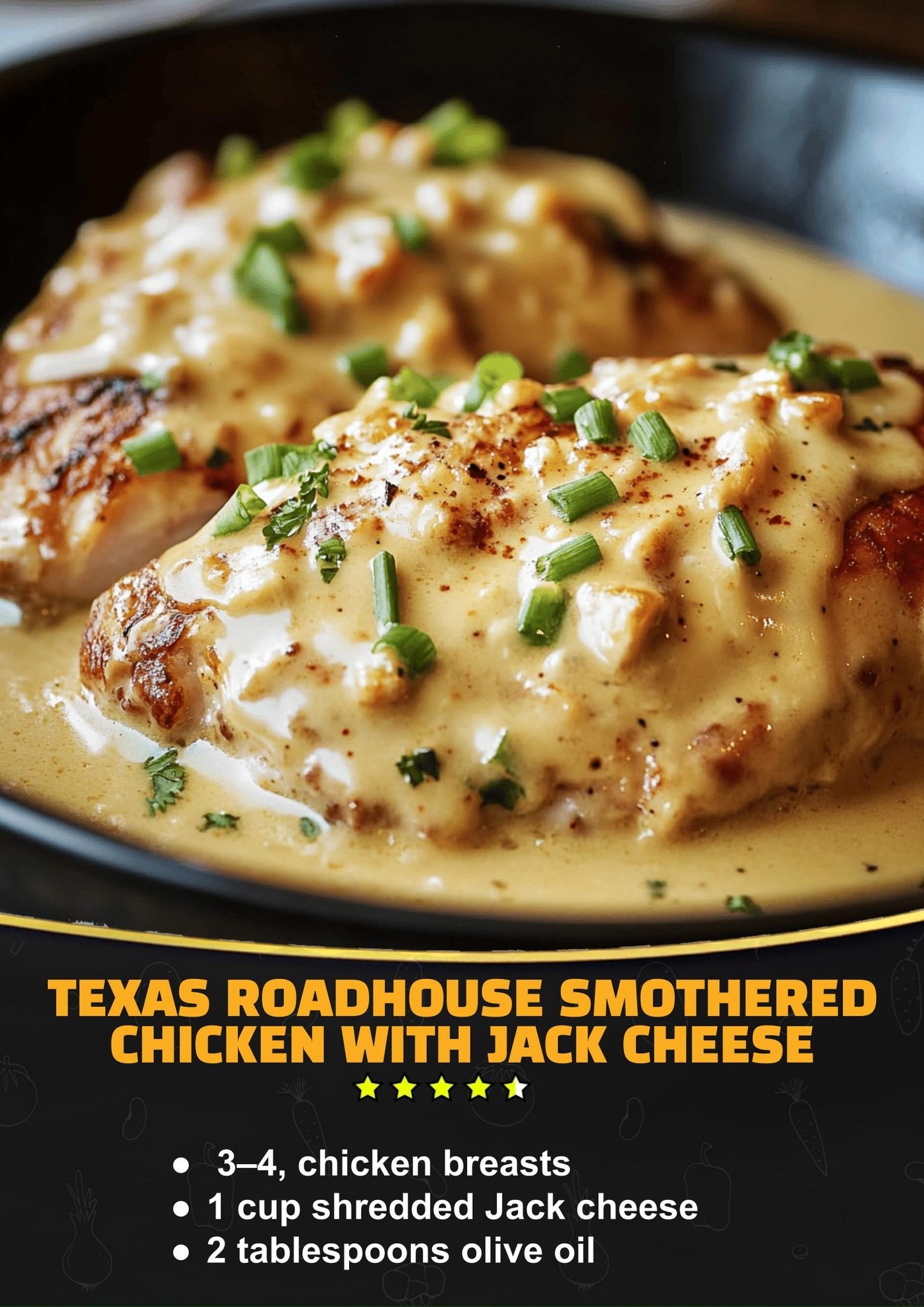
This Texas Roadhouse Smothered Chicken with Jack Cheese is more than just a recipe—it’s my go-to for turning an ordinary evening into something special without spending hours in the kitchen. The process is straightforward, the ingredients are simple, and the payoff is a restaurant-quality dish that will have everyone asking for seconds. I hope you love the way it makes your kitchen smell and your family smile as much as I do. Give it a try this week, and don’t forget to let me know how it turns out