Pro Tips for Best Results
I tested the browning step three different ways: skipping it, doing a quick sear, and taking the time for a proper, dark crust. The difference in the final stew’s depth was night and day. That Maillard reaction from proper browning is non-negotiable for the richest flavor. It adds a complexity that you simply can’t get from throwing raw beef into the pot.
Here’s what I learned the hard way about moisture levels: slow cookers vary. My old one cooked much hotter than my new one. Start with the 3 cups of broth, but if your cooker tends to run hot or you’ll be gone longer than 8 hours, you might want to add an extra 1/2 cup of liquid. You can always thicken it at the end, but you can’t add liquid back if your stew reduces too much and the edges start to darken.
For the most tender beef, low and slow is the only way to go. The high setting will cook the beef faster, but it won’t break down the connective tissue in the same gentle way, potentially leading to tougher meat. I always plan for the 8-hour low cook. If I’m in a pinch, I’ll do 4-5 hours on high, but I truly notice the texture isn’t quite as luxuriously fall-apart.
Common Mistakes to Avoid
I made this mistake the first time: I didn’t pat my beef dry. I just dumped it from the package into the hot pan. The result was a sad, steamy pot with no browning in sight, and my stew tasted flat because of it. Moisture is the enemy of browning. Taking those 60 seconds to thoroughly dry each piece is the simplest step with the biggest payoff—don’t do what I did!
Another easy misstep is over-salting too early. I’ve found that broths and Worcestershire sauce contain a lot of salt, and as the stew reduces, that salt concentrates. I now season lightly at the beginning, usually with just a teaspoon of kosher salt. I always do a final taste test and adjustment right before serving. You can add more salt then, but you can’t take it away.
Serving Suggestions
I like serving this stew in deep, wide bowls to cradle all the glorious gravy. A simple garnish of fresh chopped parsley adds a lovely pop of color and a hint of freshness that cuts through the richness beautifully. It’s the perfect finishing touch that makes it feel just a bit more special.
For the ultimate cozy meal, you absolutely must have something to soak up that incredible sauce. My personal favorite is a big slice of crusty, warm bread slathered with good butter. Alternatively, a pile of creamy mashed potatoes or buttery egg noodles makes a fantastic bed for the stew, turning it into the most comforting plate of food imaginable.
On the side, I keep things simple to let the stew shine. A bright, crisp green salad with a tangy vinaigrette balances the hearty main. For my family, roasted green beans or steamed broccoli are our go-to veggie sides. They add a nice texture contrast without competing for attention.
Variations & Customizations
This recipe is wonderfully adaptable. For a richer, deeper flavor, I’ve swapped half the beef broth for a dark beer like a stout or porter. It adds a malty, almost chocolatey note that is divine on a cold night. If you want to make it a true “beef bourguignon” style, use a full bottle of red wine and reduce the beef broth to just one cup.
You can easily change up the vegetables based on what’s in season or in your crisper. I’ve added parsnips along with the carrots for extra sweetness, or tossed in a handful of frozen peas right at the end for a burst of color and freshness. If you’re a potato lover, add 1-inch cubed Yukon Golds at the beginning—they’ll thicken the stew as they break down a bit.
For a different herb profile, rosemary is a fantastic partner to beef and mushrooms. I’ll sometimes use a sprig of fresh rosemary instead of the thyme. If you’re looking for a hint of smoky warmth, a pinch of smoked paprika stirred in with the tomato paste is a game-changer. My husband loves it when I add a few strips of chopped, cooked bacon at the end for a salty, crispy crunch.
How to Store, Freeze & Reheat
From experience, this stew stores and reheats beautifully, often tasting even better the next day as the flavors continue to meld. Let it cool completely, then store it in an airtight container in the refrigerator. It will keep well for up to 4 days. When reheating on the stovetop, do so gently over medium-low heat, stirring occasionally. You may need to add a small splash of broth or water to loosen it back up.
This stew is a fantastic candidate for the freezer, making future-you very happy. Portion it into freezer-safe bags or containers once cool, leaving a little room for expansion. It will keep for up to 3 months. To reheat, I prefer to thaw it overnight in the fridge and then warm it on the stove. If reheating from frozen, you can do so directly in a pot over low heat, adding a bit of liquid and breaking it up with a spoon as it thaws. The microwave works in a pinch, but can sometimes heat unevenly and affect the texture of the vegetables.
Conclusion
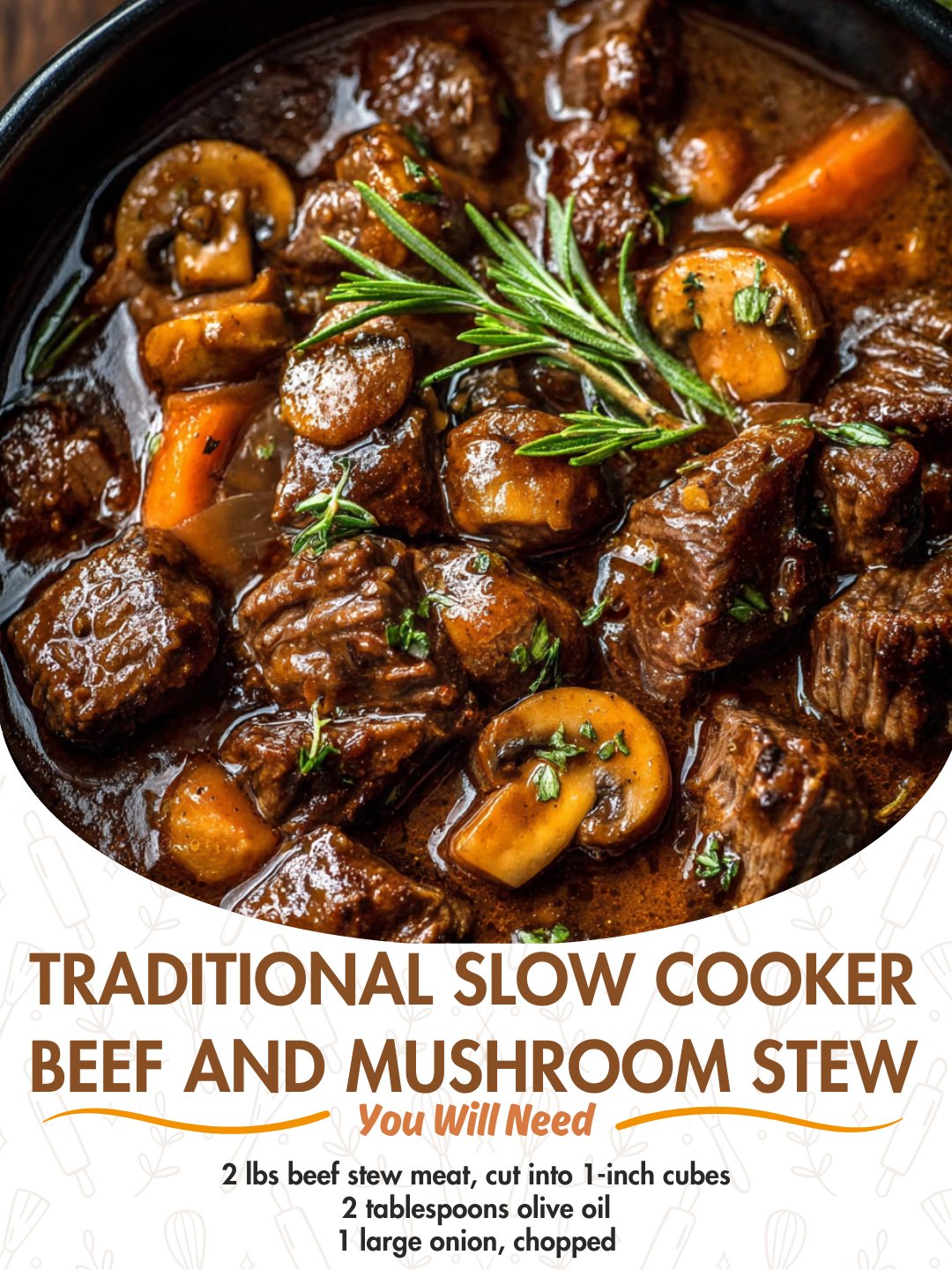
This Traditional Slow Cooker Beef and Mushroom Stew is more than just a recipe; it’s a reliable source of warmth and comfort in my kitchen. It fills the house with an irresistible aroma and fills our bellies with wholesome, delicious food. I hope it finds a regular spot in your meal rotation and brings as much joy to your table as it has to mine. Give it a try this weekend—I promise, your future self will thank you for the effortless, delicious dinner waiting at the end of a long day. Happy, cozy cooking