Pro Tips for Best Results
I tested this cake three different ways: with all-purpose flour, cake flour, and even a gluten-free blend. While all worked, the all-purpose flour gave the best sturdy-yet-tender crumb that can handle the heavy frosting and drip. Stick with it. Also, the temperature of your ingredients matters more than you think. Room-temperature eggs and milk incorporate into the batter much more evenly, leading to a uniform rise. I’ve made it with cold ingredients in a pinch, and the texture was slightly denser.
For the caramel, here’s what I learned the hard way: have your butter and warm cream measured and right next to the stove before you start cooking the sugar. You cannot walk away to get them once the sugar is melting. That 30-second delay is all it takes to burn a batch. Also, let the caramel cool to a warm, syrup-like consistency before dripping. If it’s too hot, it will just melt the frosting and slide right off. If it’s too cool, it won’t drip. Test a drip down the side of your saucepan first.
When frosting, that initial “crumb coat” is your best friend. It’s a thin layer of frosting that traps all the loose crumbs. I used to skip this, eager to get to the final look, and always ended up with a messy, speckled cake. Chilling the cake after this coat firms everything up, so your final, beautiful layer of frosting goes on cleanly and smoothly. It’s an extra step, but it makes the difference between a homemade cake and a professional-looking masterpiece.
Common Mistakes to Avoid
The first time I made this, I was so eager to taste it that I tried to assemble and frost the layers before they were completely cool. Big mistake. The frosting melted, the layers slid, and it turned into a delicious but homely mess. I cannot stress this enough: let your cakes cool completely on the wire rack. Not mostly cool, not warm to the touch—completely cool. This might take 2 hours. Use that time to clean up and make your frosting and caramel. Your future self, holding a perfect slice of cake, will thank you.
Another common pitfall is over-mixing the batter once you add the flour. Once you combine the wet and dry ingredients, mix just until you no longer see streaks of flour. Even when you add the hot coffee, mix until it’s just combined and smooth. Over-mixing develops the gluten in the flour, which can lead to a tough, chewy cake instead of the tender, soft crumb we’re after. I use a whisk for the initial combining and then switch to a flexible spatula to finish and scrape the bowl—it gives me more control.
Serving Suggestions
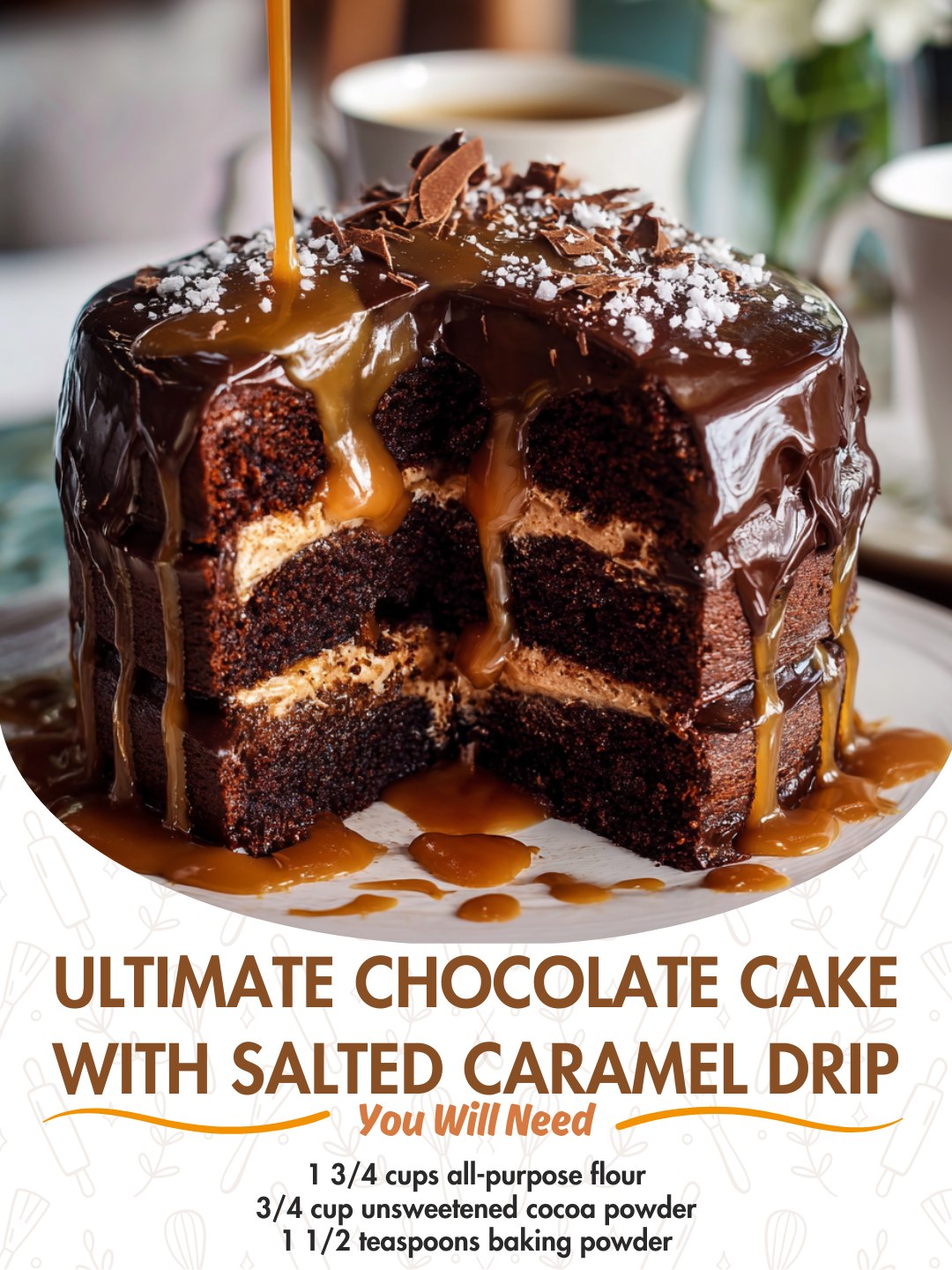
I love serving this cake at room temperature. The frosting is soft, the cake is tender, and the caramel is just gooey enough. I use a sharp, thin-bladed knife, and I run it under hot water and wipe it dry between each cut. This gives you those stunning, clean slices with a perfect cross-section of cake, frosting, and drip that look incredible on a plate. A simple white plate or cake stand really lets the dark chocolate and glossy caramel shine.
For accompaniments, a dollop of barely-sweetened whipped cream or a small scoop of vanilla bean ice cream is absolute perfection. The cold, creamy element alongside the rich cake is a divine contrast. In the fall, I’ve even served it with a side of cinnamon-spiked whipped cream, and it was a huge hit. For a beverage, a glass of cold milk is classic, but a cup of strong coffee or even a red wine with dark berry notes makes for a very sophisticated pairing.
When I’m bringing this to a party, I always transport it on the plate or stand it will be served from, and I keep it in a cardboard cake carrier. I place the carrier flat on the floor of my car—never on a seat that might tilt. I learned this lesson after a minor but heartbreaking drip-slide incident on a sharp turn. Once you arrive, let it sit for a few minutes to settle before slicing in.
Variations & Customizations
This cake is a wonderful canvas. One of my favorite variations is to add a layer of texture inside. After I spread the frosting on the first layer, I’ll sometimes press in a ring of chopped toasted pecans or hazelnuts, or even a sprinkle of crushed pretzels for an extra salty crunch. It adds a fantastic surprise in the middle of all that soft richness. Just make sure any add-ins are completely cool and dry so they don’t make the frosting soggy.
For a different frosting altogether, you can swap the chocolate buttercream for a Swiss meringue buttercream. It’s less sweet and incredibly silky. I’ve made a chocolate version of that, or even a vanilla one to let the caramel drip really stand out. You can also flavor the cake itself—adding a teaspoon of orange zest to the batter or a tablespoon of espresso powder alongside the cocoa can create lovely new dimensions.
If you’re a caramel fanatic like I am, consider filling the cake with caramel, too. Just make a double batch of the drip, let one half cool completely to a spreadable consistency, and use it between the layers along with or instead of some of the frosting. It’s next-level indulgence. For a fun twist, I once decorated the top with chocolate-covered potato chips and a extra drizzle of caramel—it was salty, sweet, crunchy, and absolutely unforgettable.
How to Store, Freeze & Reheat
To store, I place the fully decorated cake under a good cake dome or in a large, lidded cake carrier. It will stay perfectly fresh at room temperature for 2-3 days. The caramel will soften the frosting a bit where it touches, but that’s normal and delicious. Do not refrigerate the whole cake unless your kitchen is very hot, as the fridge can dry out the cake and cause the frosting to harden. If you must refrigerate it, let it come to room temperature for a few hours before serving for the best texture.
This cake freezes beautifully for future cravings! I wrap individual, unfrosted cake layers tightly in plastic wrap and then aluminum foil and freeze them for up to 3 months. Thaw overnight in the wrapper on the counter. The frosted cake can also be frozen whole, but it’s delicate. Freeze it uncovered on its plate until the frosting is rock solid (about 4 hours), then wrap it meticulously in several layers of plastic wrap. Thaw, still wrapped, in the refrigerator overnight, then bring to room temperature on the counter. I don’t recommend freezing slices with the caramel drip already on, as the texture can become sticky.
Conclusion
This Ultimate Chocolate Cake with Salted Caramel Drip is more than the sum of its parts. It’s a labor of love that never fails to bring joy, both in the making and the sharing. It has become my signature bake, the one my friends request by name. I hope it finds a special place in your recipe collection and becomes a part of your own cherished celebrations, big and small. Happy baking—I can’t wait for you to experience that first, perfect bite.