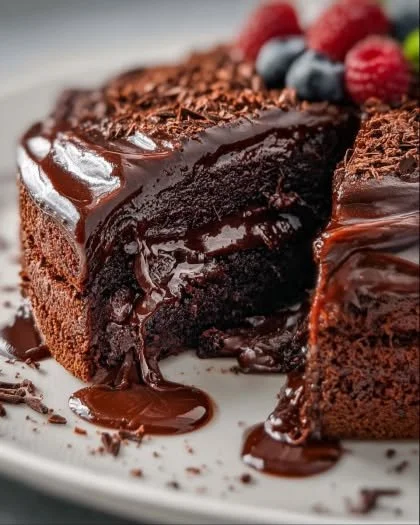
Next, I carefully add the boiling water to the batter. This step may seem unusual, but trust me! It makes the cake super moist and allows the cocoa to bloom beautifully. The batter will be quite thin, but that’s totally okay! I pour the batter evenly into the prepared cake pans and bake for 30 to 35 minutes, or until a toothpick in the center comes out clean. While they’re baking, I can’t help but soak in the intoxicating aroma filling my kitchen.
Once the cakes are out of the oven, I let them cool in the pans for about 10 minutes before transferring them to a cooling rack to cool completely. This is always the hardest part—waiting! If you’re feeling extra chocolatey, you can sprinkle the chocolate chips between the layers of cake when you’re assembling them. Now, let’s talk about the ganache. In a saucepan, I heat some heavy cream just until it’s simmering, then pour it over chopped chocolate. I let it sit for a couple of minutes before stirring, and oh, the gloss and richness it brings are simply divine!
Pro Tips for Best Results
One of the best tips I can give you is to use room temperature ingredients. This little trick makes a huge difference in the cake’s texture! I always try to take the eggs and milk out of the fridge about 30 minutes before I start baking. It sounds simple, but it really helps everything come together smoothly.
I’ve tested this cake with both cake flour and all-purpose flour and I have to say, I prefer the latter for a more decadent, tender crumb. If you do use cake flour, reduce the amount slightly. One time, I even added a shot of espresso to the boiling water, and wow—it really intensified the chocolate flavor without making the cake taste like coffee!
Lastly, patience is key. Letting the cake cool completely before frosting is crucial! If I try to frost it while it’s still warm, the ganache melts and I end up with a gloppy mess rather than a beautifully layered cake. So, trust me—cooling time is worth it.
Common Mistakes to Avoid
One mistake I’ve made in the past is not measuring my ingredients accurately. Baking is a science, and even a small miscalculation can throw off the whole cake! I learned that using a kitchen scale can help ensure my measurements are spot on every time.
Another pitfall to avoid is overmixing the batter. When I first began, I thought more mixing would lead to a lighter cake. But too much mixing develops gluten, which can result in a dense, rubbery cake. Now, I simply mix until all the ingredients are combined, and stop! (See the next page below to continue…)