Pro Tips for Best Results
I tested the searing process three different ways: in a crowded pan, in a properly spaced pan, and not searing at all, just adding the raw beef to the broth. The difference was astounding. The properly seared batch had a deep, savory complexity the others completely lacked. Trust me, take the time to do it right. It’s the most important step for building flavor.
Here’s what I learned the hard way about simmering: a gentle bubble is your friend, a rolling boil is your enemy. I got impatient once and turned the heat up too high after adding the vegetables. The potatoes broke down completely, thickening the soup in a starchy, almost gluey way, and the beef became a bit stringy. Low and slow is not just a saying; it’s the rule for this soup.
Don’t skip the fresh parsley garnish. I know it seems like a frivolous finish, but I’ve served it with and without. That little pop of fresh, green flavor at the end brightens the entire rich, hearty bowl. It’s the difference between a great soup and a “wow” soup. I always chop a little extra because people ask for it.
Common Mistakes to Avoid
The biggest mistake I made the first time was under-seasoning in layers. I just dumped everything in and planned to salt at the end. The result was a bland broth with salty beef, and no amount of fixing at the finish line could fully integrate it. Now, I season the beef lightly before browning, then again when I add the liquids, and always do a final adjustment at the end. Seasoning as you go builds a much more cohesive and delicious flavor profile.
Another classic error is rushing the vegetable additions. If you add delicate veggies like zucchini or frozen peas at the same time as potatoes, they’ll disintegrate. I made this mistake with green beans once—they were gray and lifeless by the time the potatoes were done. Group your vegetables by required cooking time. Root veggies first, sturdy fresh veggies next, frozen or delicate greens last. It seems simple, but it ensures every element is perfectly cooked.
Serving Suggestions
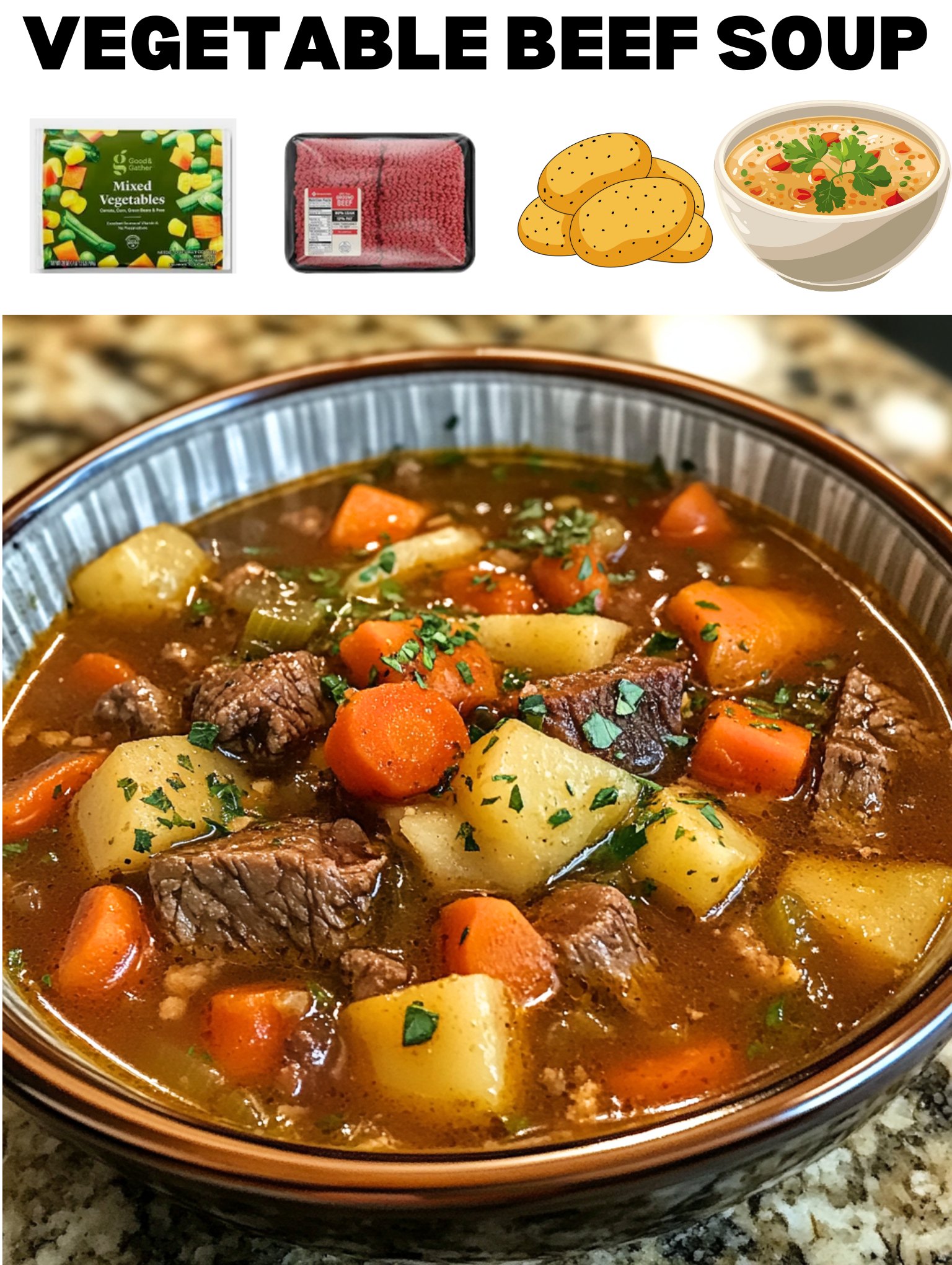
I love serving this soup steaming hot in deep, wide bowls. It’s a meal all on its own, but a side of crusty, buttered bread or flaky biscuits is non-negotiable in my house. There’s nothing better than using a piece of bread to get every last drop of that incredible broth. For a lighter touch, a simple side salad with a sharp vinaigrette cuts through the richness beautifully.
On particularly hungry nights, I’ll set out little bowls of toppings to make it a fun, interactive meal. A sprinkle of grated Parmesan or sharp cheddar cheese melts wonderfully into the hot soup. A dollop of sour cream or a dash of hot sauce are also fantastic. I’ve even seen my dad add a handful of oyster crackers for a bit of crunch. Let people customize their bowl!
When I have guests, I lean into the cozy, rustic vibe. I serve the soup right from the Dutch oven at the table, with the bread in a basket lined with a tea towel. It feels generous, welcoming, and unfussy—exactly what comfort food should be. It’s the kind of meal that encourages seconds and long conversations.
Variations & Customizations
One of my favorite twists is a “Soup au Pistou” version. Right before serving, I stir in a big spoonful of homemade basil pesto. It infuses the soup with a gorgeous, herby, garlicky freshness that’s absolutely incredible. It feels a bit fancier but takes only seconds. I’ve also swapped the dried thyme for a rosemary sprig while simmering (remove it before serving) for a more woodsy, aromatic flavor.
For a richer, almost stew-like version, I’ll sometimes add a cup of pearled barley when I add the potatoes and carrots. It absorbs the broth and plumps up, making the soup even heartier and more satisfying. Just be aware it will thicken the soup considerably, so you may need to add a bit more broth or water at the end. A friend of mine adds a can of drained and rinsed white beans for extra protein and fiber, which is also delicious.
If you’re looking for a different flavor profile, try using fire-roasted diced tomatoes instead of regular. They add a subtle smokiness. You can also use all beef broth instead of broth and water for a more intense flavor, though I find the water helps keep the saltiness in check and lets the vegetable flavors shine through a bit more. This recipe is a wonderful canvas—make it your own!
How to Store, Freeze & Reheat
This soup stores and reheats beautifully, often tasting even better on day two or three. Let it cool completely, then store it in an airtight container in the refrigerator for up to 4 days. When reheating on the stovetop, do so gently over medium-low heat, stirring occasionally. You may need to add a small splash of broth or water as it thickens upon standing. I do not recommend reheating it in the microwave on high power, as it can make the beef rubbery and heat unevenly.
For freezing, this is a champion. Portion the completely cooled soup into freezer-safe bags or containers, leaving about an inch of space for expansion. It will keep well for up to 3 months. To serve, thaw overnight in the refrigerator. When reheating from frozen, I put the frozen block in a pot over low heat with a lid, adding a little broth or water, and let it thaw and heat slowly, breaking it up with a spoon as it melts. This gentle method helps preserve the texture of the meat and vegetables.
Conclusion
This Vegetable Beef Soup is more than just a list of ingredients and steps; it’s a feeling you create in your kitchen. It’s the promise of warmth, the guarantee of a satisfying meal, and the joy of sharing something made with care. I hope this recipe finds its way into your regular rotation and becomes a source of comfort and happiness for you and your loved ones, just as it has for me. Now, go grab your Dutch oven—it’s time to make some magic.