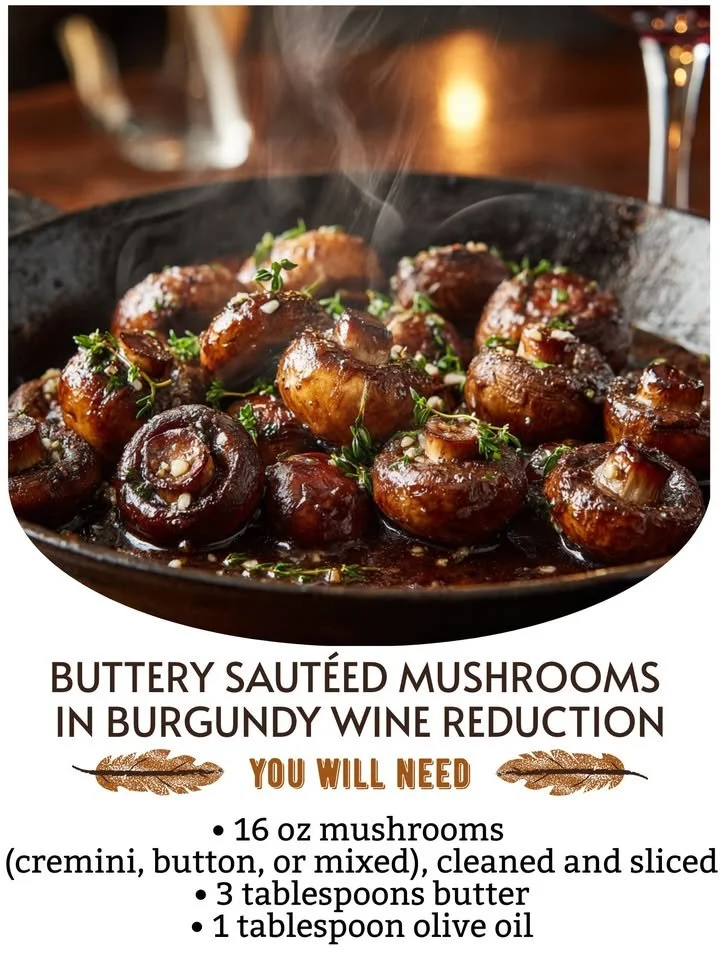
As the mushrooms begin to cook, they will soak up all that delicious buttery goodness. I let them sauté for about 5-7 minutes until they’re nicely browned and tender. Then, it’s time to add the minced garlic and thyme. The minute the garlic enters the skillet, my kitchen fills with an irresistible aroma that always makes my mouth water. After sautéing for another minute, I pour in the Burgundy wine, letting it bubble for a few minutes to reduce. The wine deepens the flavor profile, creating a rich sauce that clings beautifully to the mushrooms.
After the wine has reduced by about half, I season the mixture generously with salt and pepper to taste. I usually start with a pinch of each and adjust as needed. Once everything is coated in that velvety sauce, I remove the skillet from the heat. For an added touch of freshness, I like to sprinkle some chopped parsley on top just before serving. This dish can be served hot with a sprinkle of more fresh thyme for a touch of elegance.
Pro Tips for Best Results
One thing I’ve learned through trial and error is the importance of using fresh mushrooms. Dried or old mushrooms just don’t deliver that rich flavor you expect. When picking mushrooms, look for ones that are firm and plump with a smooth appearance.
I tested this recipe three ways: with different kinds of mushrooms, various cooking times, and varying wine types. It turns out, cremini mushrooms have a lovely depth that complements the rich wine reduction beautifully. A little bit of experimentation is always fun!
Finally, don’t rush the sautéing process. Letting the mushrooms cook until they’re golden brown is key to achieving that delightful caramelization, and the wait is absolutely worth it. Just make sure to stir occasionally to prevent them from burning.
Common Mistakes to Avoid
One of the biggest mistakes I’ve made in the past is overcrowding the skillet. If you add too many mushrooms at once, they’ll steam instead of sauté, resulting in a soggy dish. I always cook in batches if I have a larger quantity of mushrooms.
Another common pitfall is rushing the wine reduction. If you don’t allow the wine to properly reduce, you’ll end up with a dish that’s too watery, and it won’t have that rich, concentrated flavor. A well-reduced wine gives the dish that lovely glossy finish. (See the next page below to continue…)