Pro Tips for Best Results
I tested the freezing times three different ways. The first time, I only froze the coated scoops for an hour. It was a disaster—the coating was golden, but the ice cream had softened into a milkshake consistency. Trust me, a minimum of 3-4 hours total freeze time for the coated scoops is non-negotiable. Overnight is even better. It feels like you’re doing nothing, but this passive time is the most active step in guaranteeing that perfect temperature contrast.
Here’s what I learned the hard way about the coating: you must crush the cornflakes finely, but not into dust. I’ve used a food processor and a zip-top bag with a rolling pin. The bag method gives you more control to get a mix of fine and slightly larger pieces, which creates a more interesting, craggy, and crunchy texture. Also, really press the crumbs into the ice cream during the coating stage. Don’t just roll it; encase it.
Keep your chocolate sauce simple and make it while the oil heats. It comes together in minutes and can sit off the heat until you’re ready. If it thickens too much, a tiny splash of warm cream will loosen it right up. Having your strawberries sliced, your plates out, and your whipped cream ready means you can go from fry to serve in under a minute, which is essential for that perfect textural experience.
Common Mistakes to Avoid
My biggest first-time mistake was using ice cream straight from the container. I didn’t pre-scoop and freeze the balls alone first. The result was a messy, melty coating process that led to a thin, patchy crust. Don’t do what I did. Always, always do that initial scoop-and-freeze on the bare ice cream. It makes the entire coating process clean and easy, and your future self, holding that perfectly round fried masterpiece, will thank you.
Another classic error is frying at the wrong temperature. If your oil is too cool, the coating will soak up oil and become greasy before it browns. If it’s too hot, the crumbs will burn in seconds, leaving the ice cream inside still too hard or oddly crystallized. That instant-read thermometer is your lifeline. Also, don’t crowd the pot. Fry one, maximum two scoops at a time to maintain the oil temperature. Dropping in a third scoop will cause the temp to plummet.
Serving Suggestions
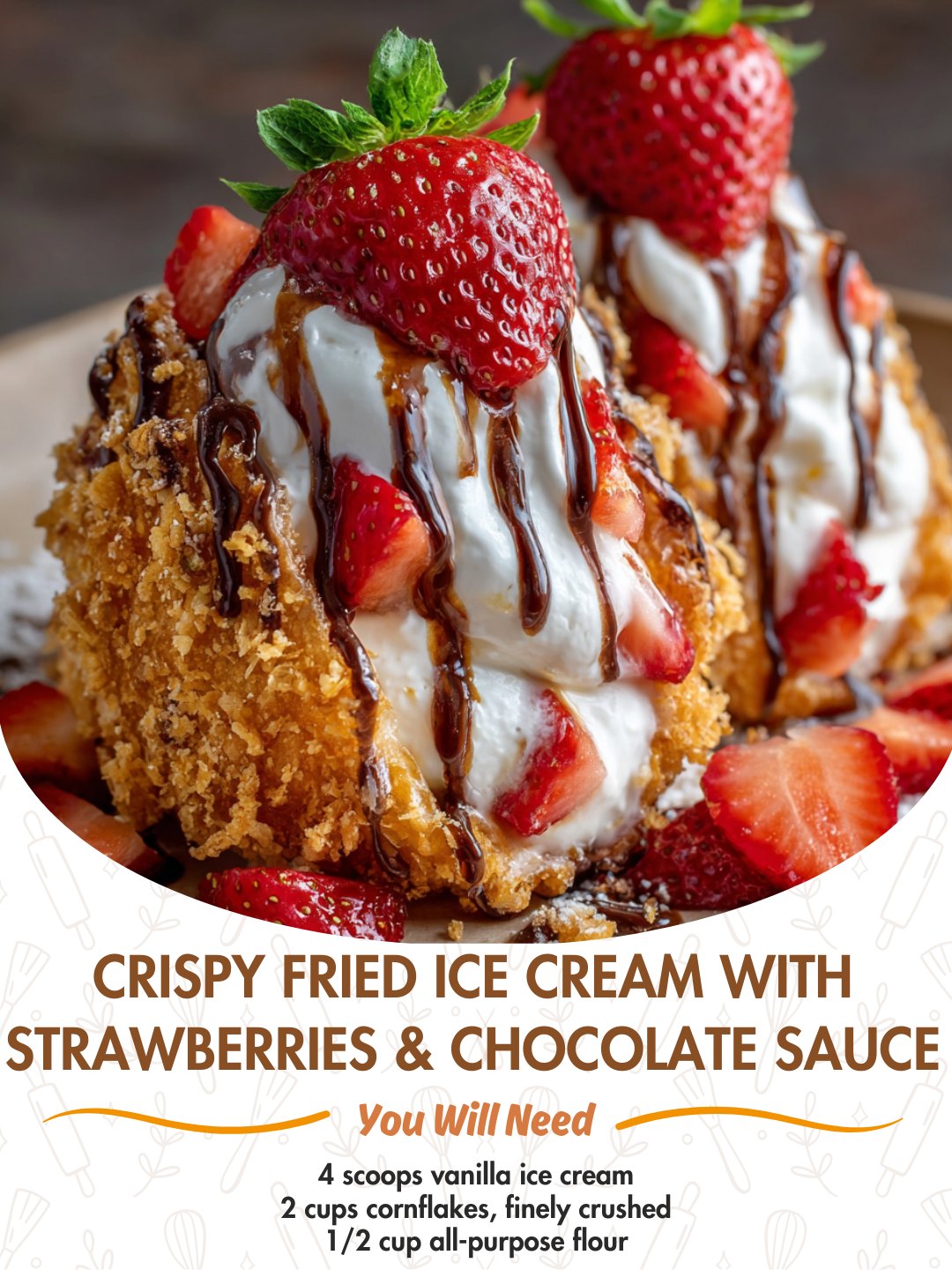
I like serving this immediately after frying, placing the warm, crispy sphere right onto a chilled plate. I drizzle the warm chocolate sauce around it, not directly on top at first, to preserve that crunch. Then, I artfully pile the fresh strawberry slices alongside. The cool, juicy berries cut through the richness beautifully. A final dollop of freshly whipped cream and perhaps a light sprinkle of the leftover cornflake crumbs over the top makes it look straight out of a bistro kitchen.
For a dinner party, I set up a little assembly line: I’ll fry two scoops at a time and have my partner ready with the plates for immediate saucing and garnishing. We serve them the second they come out of the oil. The “oohs” and “aahs” are part of the fun. It turns dessert into a little performance, and everyone feels like they’re getting something made just for them in that moment.
If I’m feeling extra, I’ll add a sprinkle of flaky sea salt over the chocolate sauce. The salty note makes the sweet vanilla and chocolate absolutely sing. A sprig of mint adds a lovely fresh aroma and a pop of color, but it’s truly optional. The beauty is in the simplicity of the main components working in harmony.
Variations & Customizations
The beauty of this template is how easily you can make it your own. I’ve swapped the vanilla ice cream for cookies and cream, and the result was phenomenal—the cookie bits in the ice cream added another layer of texture. A rich chocolate ice cream with a hazelnut-crunch coating (using crushed toasted hazelnuts and panko) drizzled with raspberry sauce is a decadent variation I tried for a chocolate lover’s birthday.
You can play with the crust endlessly. Instead of cinnamon, add a tablespoon of cocoa powder to the cornflakes for a double-chocolate experience. For a tropical twist, use coconut ice cream, roll it in crushed vanilla wafers or shredded coconut, and serve it with a mango or pineapple compote. I’ve even seen a friend use crushed ginger snaps for a lovely spicy note.
For the sauces, caramel is a natural pairing instead of chocolate. A salted caramel sauce with the vanilla ice cream and strawberries is divine. In the fall, I skip the strawberries and serve the fried ice cream on a bed of sautéed cinnamon apples. The possibilities are only limited by what’s in your freezer and pantry!
How to Store, Freeze & Reheat
Let’s be honest: this is a dessert best enjoyed immediately. However, you can absolutely prep ahead. The fully coated, unbaked ice cream balls can be frozen solid on their tray, then transferred to an airtight container or zip-top bag for up to a week. This is a fantastic party trick—just fry straight from the freezer when your guests arrive.
I do not recommend storing leftovers after frying. The coating will lose its crispness and become soggy. If you absolutely must, you can place them back in the freezer on a plate, but expect the texture to suffer. You cannot re-fry them, and microwaving is a disastrous path to a melted mess. The good news is, they’re so delicious, leftovers are rarely a problem!
Conclusion
Crispy fried ice cream is more than just a dessert; it’s a joyful kitchen experiment that rewards you with something truly spectacular. It has become my signature “wow” dish, and every time I make it, I recapture a bit of that excitement from my first attempt. I hope you gather your ingredients, embrace the process (especially the freezing time!), and treat yourself and your loved ones to this magical combination of hot, cold, crunchy, and creamy. Happy frying