Pro Tips for Best Results
Chilling the custard thoroughly before adding the fruit is my golden rule. I tested this three different ways: adding fruit to warm custard, lukewarm custard, and cold custard. The warm version made the bananas mushy and the apples weirdly soft. The cold custard keeps every piece of fruit distinct and fresh-tasting. It’s worth the wait, I promise.
For the creamiest texture, a heavy-bottomed saucepan is your best friend. It distributes heat evenly, preventing those pesky hot spots that can cause the custard to scorch at the bottom. I’ve used thin pans in a pinch, and it requires much more vigilant stirring and a lower heat. The right tool just makes the process smoother and more foolproof.
If you’re preparing this ahead of time for a party, here’s my strategy: I make the custard base and chop all my sturdy fruits (like apples and grapes) a day ahead, storing them separately in the fridge. I slice the banana and prepare any delicate berries right before assembling. This keeps everything vibrant and fresh, and assembly takes just five minutes before serving.
Common Mistakes to Avoid
The biggest mistake I made the first time was being impatient with the slurry and the whisking. I thought a few lumps were no big deal, but they never fully dissolve and you end up with a grainy texture. Don’t do what I did. Take the minute to whisk the initial slurry until it’s silky, and then whisk constantly when combining it with the hot milk. It’s the difference between professional-looking custard and a disappointing one.
Another easy misstep is overcooking the fruit by adding it too soon. Your custard needs to be completely cold. Think of the fruit as a fresh mix-in, not an ingredient to be cooked. I also used pineapple and kiwi once without thinking, and their enzymes broke down the custard, making it watery. Stick to fruits like apples, bananas, berries, mangoes, and citrus segments—they play nicely with the dairy.
Serving Suggestions
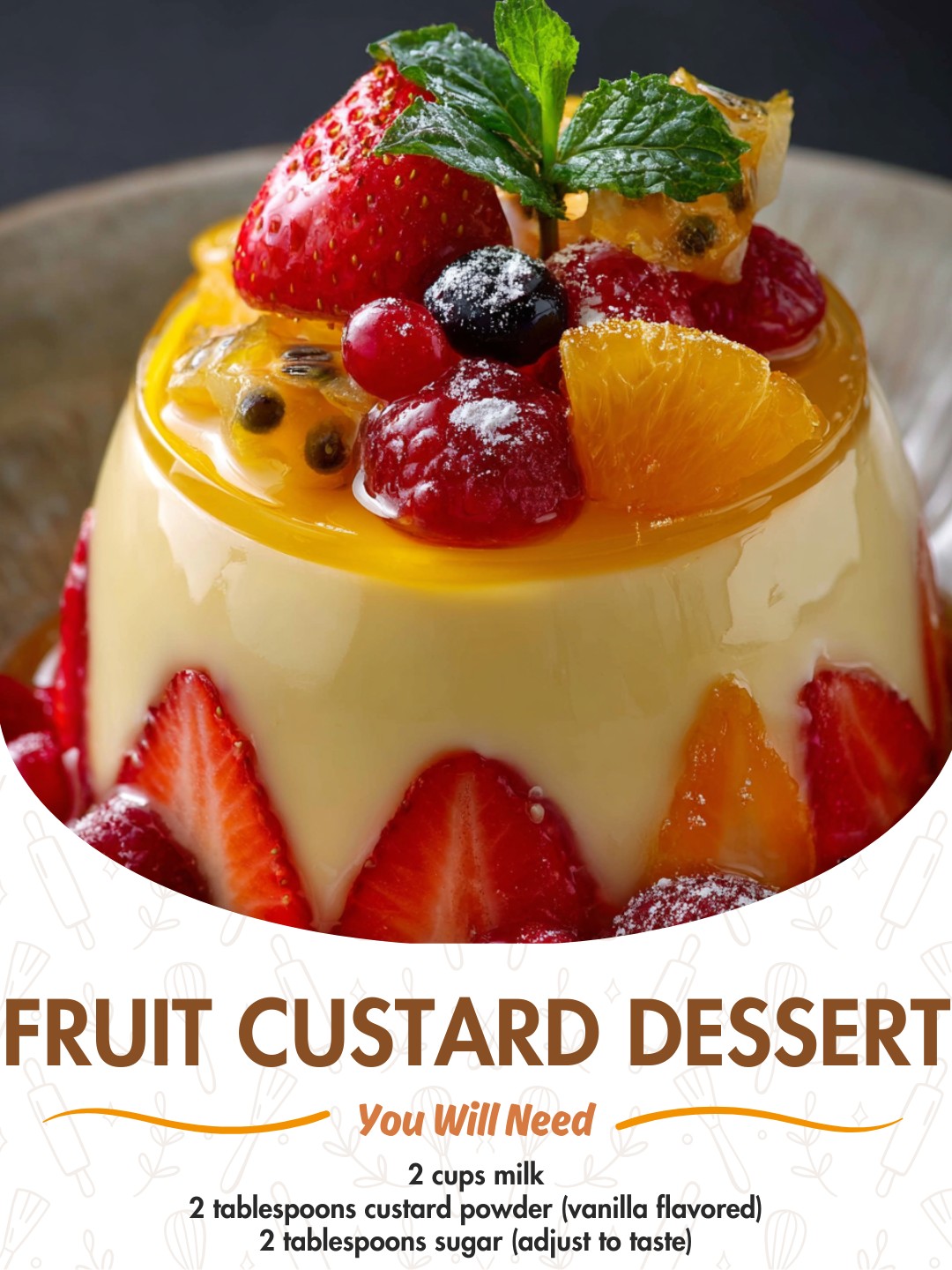
I love serving this dessert in clear glass bowls or a large trifle dish. The layers of creamy custard and bright fruit just look so inviting and festive. For a simple weeknight treat, I’ll portion it into individual cups right after mixing. It feels special, even on a Tuesday.
For a bit of extra texture and flair, I always top each serving with a sprinkle of chopped pistachios or almonds right before it hits the table. The gentle crunch against the creamy, soft custard is divine. Sometimes, if I’m feeling indulgent, I’ll add a small sprinkle of crumbled digestive biscuits or even a few dark chocolate shavings for the adults.
This fruit custard is incredibly versatile. I’ve served it as a light dessert after a heavy curry, as the star of a summer BBQ spread, and even as a fancy-ish brunch item. It pairs beautifully with a cup of strong coffee or a light, floral tea. It’s truly an all-occasion kind of dish.
Variations & Customizations
One of my favorite spins is a tropical version. I swap the berries and apples for ripe mango chunks, sweet pineapple (canned is fine here, as the custard is already set), and a bit of toasted coconut folded in at the end. It tastes like a vacation in a bowl. I’ve also seen friends add a handful of chia seeds to the cooling custard for a nutritious boost and a fun, pudding-like texture.
For a more decadent, party-ready dessert, try layering it. In a glass, I’ll do a layer of crumbled cake or vanilla wafers, then custard, then fruit, and repeat. It turns into an impressive deconstructed trifle. Another hit with my chocolate-loving family is using chocolate custard powder instead of vanilla. Mixed with strawberries and bananas, it’s like a healthier chocolate fondue in bowl form.
If you’re catering to different diets, this recipe is forgiving. I’ve successfully made it with unsweetened almond milk, though the custard will be a bit thinner—a half-tablespoon of cornstarch mixed with the custard powder helps. For a vegan version, use plant-based milk and a vegan custard powder or cornstarch as a thickener, sweetened with maple syrup.
How to Store, Freeze & Reheat
Once assembled, this dessert is best enjoyed within 24 hours. The fruits, especially bananas, will start to soften and release liquid. I store it covered tightly in the refrigerator. If I know I’ll have leftovers, I’ll often hold back a portion of the plain custard and some chopped fruit to mix fresh the next day. It keeps the experience perfect.
I do not recommend freezing the assembled dessert. The custard can become grainy and the fruit will turn into a mushy, watery mess upon thawing. However, you can successfully freeze the plain custard base (without fruit) for up to a month. Thaw it overnight in the fridge and whisk it vigorously to restore its smooth texture before folding in fresh fruit. This is a great make-ahead trick for the base during the busy holiday season.
Conclusion
This Fruit Custard Dessert has earned a permanent spot in my recipe repertoire for its sheer simplicity, versatility, and the pure comfort it brings to the table. It’s a recipe that encourages you to slow down, enjoy the process of watching milk transform into something magical, and celebrate the simple goodness of fresh fruit. I hope it becomes a cherished, go-to treat in your kitchen too, creating its own set of sweet memories for you and the people you share it with. Happy cooking