Pro Tips for Best Results
The single biggest tip I can give you is to get your skillet properly hot before adding the salmon. I tested this three different ways—low heat, medium heat, and screaming hot. A properly preheated pan over medium-high heat gives you that crisp exterior without overcooking the interior. If your salmon sticks, it’s not ready to flip. Wait another minute, and it will release on its own.
Don’t crowd the shrimp! I made this mistake the first time and ended up steaming them instead of sautéing. They release moisture, so if the pan is too full, they’ll boil in their own juices. Cook them in two batches if your skillet isn’t large enough. It takes an extra minute but guarantees plump, perfectly seared shrimp every single time.
Let the salmon rest for 5 minutes after you take it out of the oven. I know it’s tempting to dig right in, but this allows the juices to redistribute. When I cut into it immediately, all those beautiful juices ran out onto the plate. Letting it rest keeps every bite moist and flavorful. It’s a small step with a huge payoff.
Common Mistakes to Avoid
The garlic can burn in a flash, and burnt garlic is bitter and ruins the whole sauce. I learned this the hard way when I got distracted answering a text. As soon as you add the garlic to the butter, stay at the stove and stir constantly. It should become fragrant and turn a light golden color, not a deep brown. Have your wine or broth measured and ready to go so you can pour it in the second the garlic is ready.
Another classic mistake is overcooking the shrimp. They cook in literally 2-4 minutes total. As soon as they curl into a loose “C” shape and turn pink, they’re done. They will continue to cook a little from residual heat, especially when you put the whole dish in the oven. Undercook them slightly in the skillet, and they’ll be perfect by the time you serve. Overcooked shrimp are tough and sad—don’t do what I did!
Serving Suggestions
I love serving this dish family-style, right in the skillet I cooked it in. It feels rustic and inviting. I place the skillet on a trivet in the middle of the table with a big bowl of that steaming jasmine rice and a simple green salad tossed in a light vinaigrette. The crisp, cool salad is the perfect contrast to the rich, garlicky seafood.
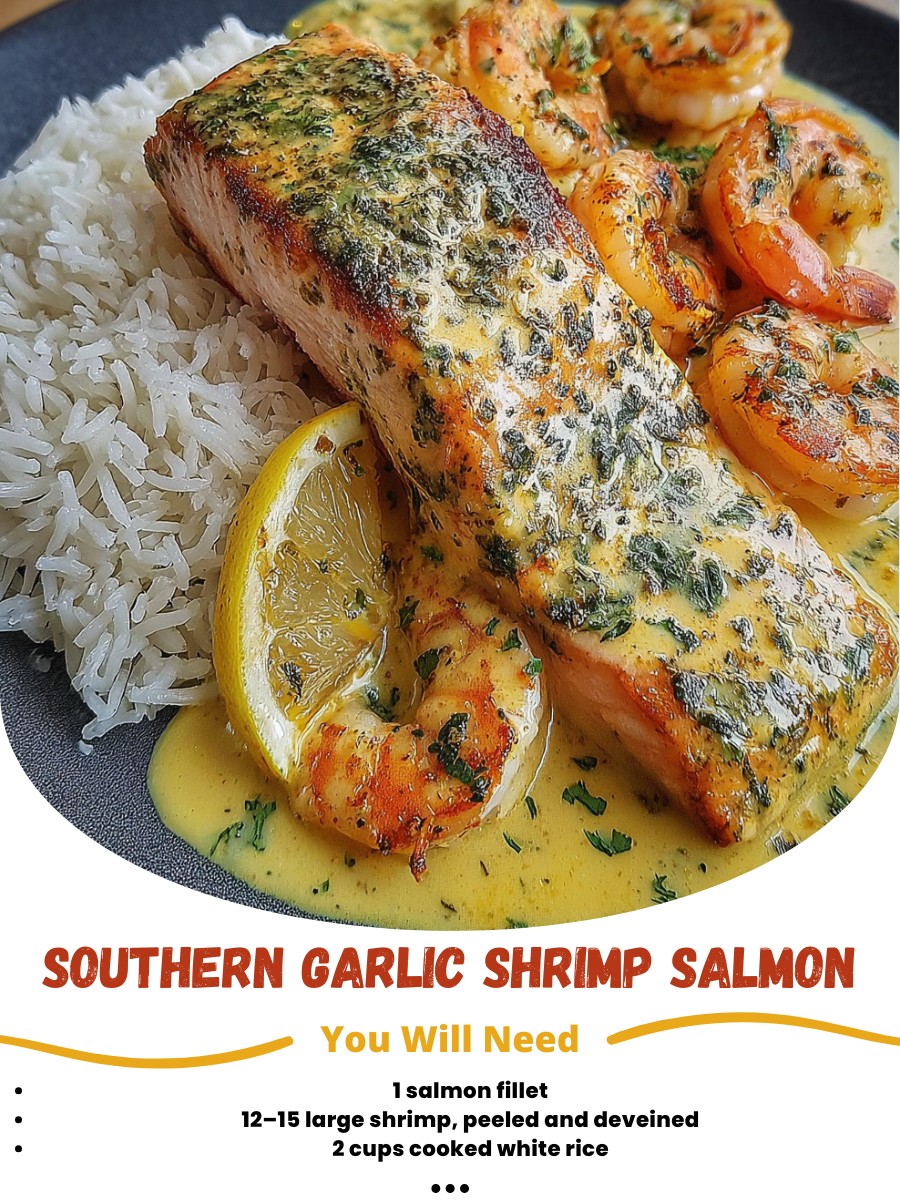
For a more elevated presentation, I plate it individually. I use a ring mold to make a neat circle of rice, place the salmon on top, lean a few shrimp against it, and then artfully spoon the sauce around. A final sprinkle of parsley and a thin lemon slice on top makes it look like it came from a seaside bistro. It’s absolutely stunning for guests.
Don’t forget the bread! A crusty baguette or some warm, soft dinner rolls are mandatory in my house. That garlic butter sauce is too good to leave behind. We use the bread to mop up every last drop from our plates. It’s the best part of the meal, and I’m not ashamed to admit it.
Variations & Customizations
If you’re not a fan of salmon, this method works wonderfully with firm white fish like halibut or cod. The cooking time will be similar. I’ve also made it with chicken breasts (pounded to an even thickness) and it was fantastic—just increase the initial searing time by a few minutes to ensure the chicken cooks through.
Want to pack in more veggies? I often add a handful of fresh spinach to the garlic butter sauce right after I deglaze with wine. It wilts down in seconds. You can also sauté some sliced bell peppers or asparagus tips with the shrimp. Another version I love is using broccoli florets—I blanch them first, then toss them in at the end to coat in the sauce.
For a dairy-free version, you can substitute a high-quality olive oil or vegan butter for the regular butter. The flavor profile changes slightly, but it’s still delicious. And for a kick, add a tablespoon of Cajun or Old Bay seasoning to the shrimp before you sauté them. It gives it a totally different, spicier personality that’s really fun.
How to Store, Freeze & Reheat
To store leftovers, I let everything cool completely before transferring it to an airtight container. I keep the rice, salmon, shrimp, and sauce all together. It will last in the fridge for up to 2 days. The garlic flavor will intensify, which I personally love.
Reheating is a delicate process because seafood can dry out or become rubbery if zapped in the microwave. My method is to gently reheat it in a covered skillet over low heat with a tiny splash of water or broth to create steam. It usually takes 5-7 minutes. You can freeze this dish, but I only recommend freezing the cooked salmon and shrimp (without rice) in the sauce. Thaw overnight in the fridge and reheat gently in a skillet. The texture of the seafood won’t be quite as perfect as fresh, but the flavors will still be incredible.
Conclusion
This Southern Garlic Shrimp & Salmon recipe is more than just a meal; it’s my little kitchen victory, and I’m so thrilled to share it with you. It has saved me on countless weeknights and impressed just as many friends. The combination of flavors is just soul-satisfying. I hope it brings as much joy to your table as it has to mine. Give it a try this week, and don’t forget that extra bread for the sauce. Happy cooking