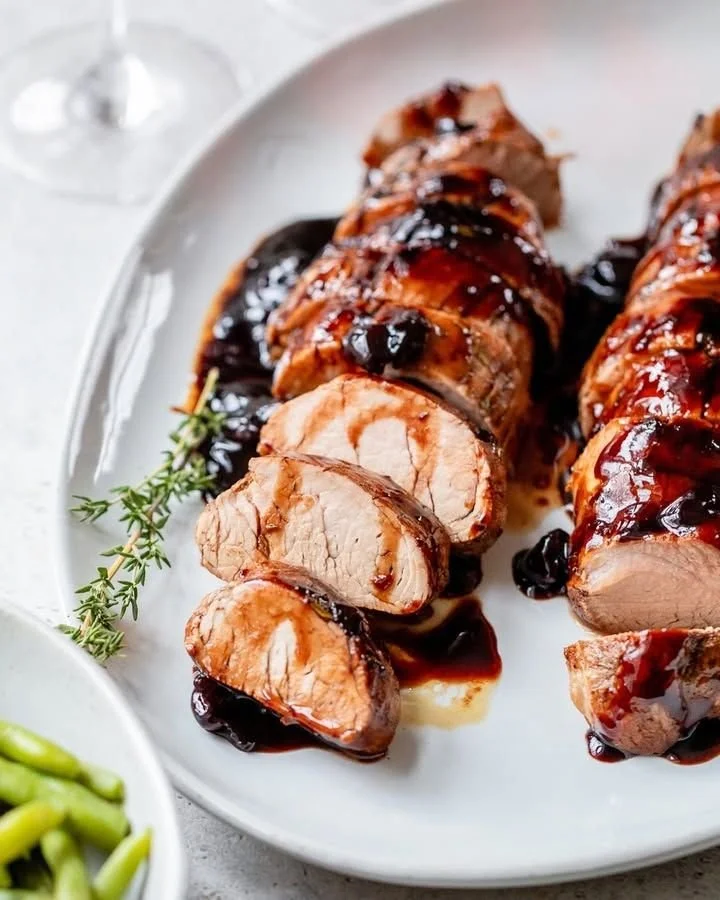
Next, while the pork is searing, prepare the cherry balsamic glaze. In a bowl, combine the pitted cherries, balsamic vinegar, honey, minced garlic, and thyme. Whisk these ingredients together until well combined. Once the pork is nicely browned, transfer it to a baking dish. Pour the cherry glaze over the tenderloin, ensuring every inch is covered in that luscious sauce. I always get excited at this stage, as the vibrant reds of the cherries against the golden pork make for a stunning visual!
Now, pop the baking dish into the preheated oven and roast the pork for about 20-25 minutes or until it reaches an internal temperature of 145°F (63°C). Keep in mind, oven temperatures can vary, so it’s always best to use a meat thermometer for accuracy! While the pork cooks, I usually take a moment to savor the heavenly smell wafting through my kitchen.
When the pork is done, remove it from the oven and let it rest for about 5 minutes before slicing. This resting period allows the juices to redistribute, resulting in a moist and tender pork tenderloin every time. If you’d like a thicker sauce, you can return the cherry glaze to the stovetop and whisk in a tablespoon of cornstarch mixed with water, bringing it to a gentle boil for a few minutes until thickened.
Pro Tips for Best Results
One thing I’ve learned is that quality really matters. When choosing the cherries, go for fresh when they’re in season; they make a world of difference in taste. I once used canned cherries in a pinch, and while it still turned out tasty, there’s nothing like fresh cherries to elevate the dish.
Another tip I’ve discovered through multiple attempts is to adjust the sweetness based on your palate. If you prefer it less sweet, feel free to reduce the amount of honey. On the flip side, if you love a sweeter glaze, adding an extra drizzle won’t hurt at all!
Lastly, I recommend letting the leftover pork tenderloin cool completely before storing it. I usually slice what I need for dinner and then store the rest whole to maintain its juiciness. Trust me, the leftovers make for a fantastic sandwich the next day!
Common Mistakes to Avoid
One common mistake I made early on was not allowing the pork to rest after cooking. I was always too eager to dig in! I learned that letting it rest is crucial for maintaining the moisture and tenderness of the meat. So, remember: patience can lead to perfection!
Another pitfall is overcooking the pork. While I understand the instinct to ensure it’s well done, too much time in the oven can lead to dry meat. Use a reliable meat thermometer, and pull it out of the oven as soon as it hits that sweet spot of 145°F (63°C).
I also found that skipping the searing step can result in a lack of flavor. The caramelization that happens during searing adds depth to the dish, so don’t skip that crucial step! If you’re short on time, I get it, but trust me; the extra few minutes are so worth it. (See the next page below to continue…)