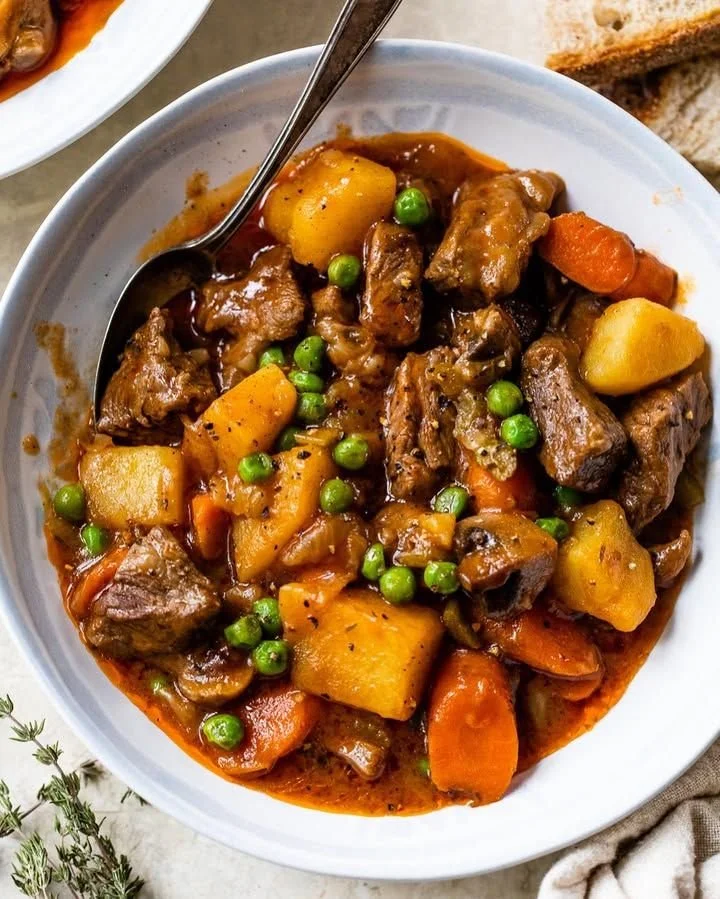
Next, in the same pot, I toss in the chopped onion, carrots, and celery. I sauté them for about five minutes until they soften and the onions become translucent. The fragrance that fills my kitchen at this stage is lovely. Then, I add the minced garlic and cook for an additional minute, just until it’s fragrant. Returning the beef to the pot, I pour in the red wine (if using) and scrape the bottom to deglaze, ensuring I get all those flavorful bits incorporated.
After that, I add the beef broth, potatoes, tomato paste, thyme, bay leaves, and season with salt and pepper. I bring the stew to a gentle boil before reducing the heat. It’s time for a low simmer; I cover the pot and let it bubble away for about two hours. The wonder of beef stew is in the patience of simmering—this is when the flavors truly deepen.
When the time is up, I remove the bay leaves and give the stew a quick stir before tasting. Adjusting the seasoning, if needed, is essential. I often find myself adding a pinch more of salt or pepper to achieve that just-right flavor. The texture is rich, the beef is tender, and my heart feels full.
Pro Tips for Best Results
One thing I’ve learned while making this beef stew is to choose the right cut of beef. Chuck roast is my go-to for its tenderness and flavor after slow cooking. I’ve tested this with sirloin and even round cuts, but they tend to dry out a bit too much, unfortunately.
Another tip I swear by is to let the stew cool completely before refrigerating it. This allows the flavors to meld further, and trust me, the leftovers are even better the next day! I sometimes make a double batch because my family is always ready for seconds.
Finally, don’t rush the simmering process. Taking your time gives the beef ample opportunity to become tender and soak up all the delicious flavors. I’ve tried cooking it faster at times, but the results were never as satisfying—so, patience truly pays off in this recipe!
Common Mistakes to Avoid
One common mistake I made early on was skimping on browning the beef. I learned that this step is essential for building flavor instead of simply tossing everything into the pot. Without that nice sear, the stew can end up tasting a bit flat or bland.
Another oversight is overcrowding the pot while browning the beef. It’s tempting to throw it all in at once, but doing this leads to steaming rather than browning—so I’ve learned to work in batches, which really makes a difference in the final taste. (See the next page below to continue…)