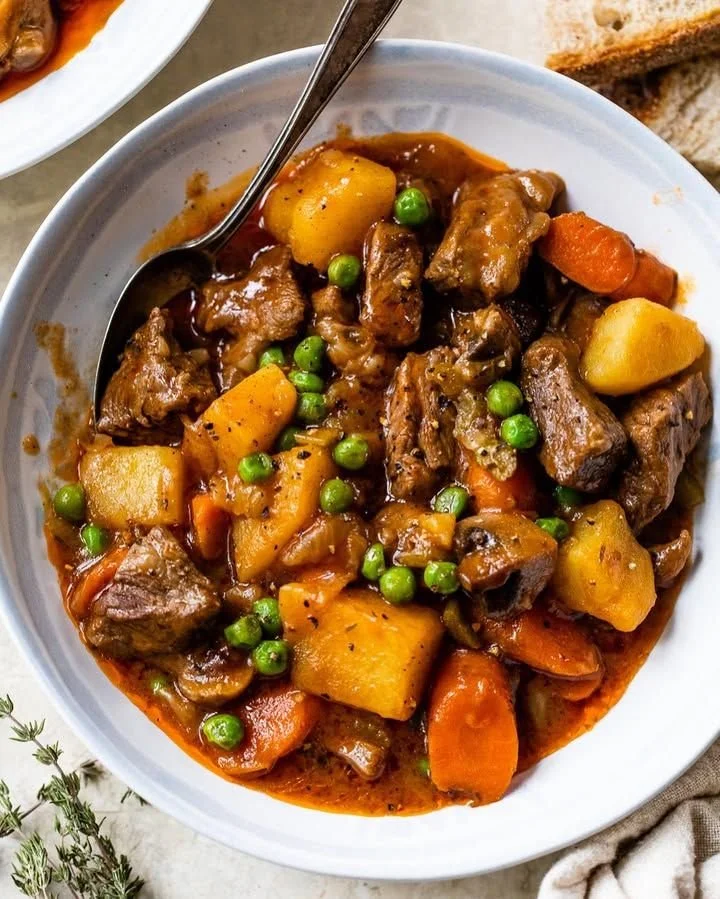
I also used to add my vegetables at the same time as the meat. The problem? Those delicate veggies overcook while waiting for the beef to become tender. Now, I stagger my additions to ensure they’re perfectly cooked and maintain their vibrant colors and textures.
Lastly, not adjusting the seasoning at the end can be a letdown. It’s easy to forget, but tasting and tweaking your stew after cooking can elevate it from good to great. I’ve been guilty of not giving it that final touch, and now I always take a moment to taste before serving.
Serving Suggestions
When it comes time to serve my beef stew, I love to pair it with warm, crusty bread. There’s nothing quite like dipping a slice of fresh bread into that rich, savory broth. It adds a wonderful texture and complements the stew beautifully.
I also enjoy serving the stew with a simple mixed greens salad to balance out the hearty flavors. I usually toss in some vinaigrette for a refreshing contrast, and it’s the perfect light addition to the meal.
To take it over the top, I sprinkle some freshly chopped parsley on top right before serving. It adds a lovely pop of color and a fresh flavor that brightens the dish, creating visually appealing and appetizing plates that my family can’t resist.
Variations & Customizations
One fun way I like to customize my stew is by adding different vegetables based on the season. In the fall, for example, I might throw in some butternut squash or parsnips for a lovely sweetness. In the spring, I love incorporating peas for that vibrant green touch.
Another delicious twist is to experiment with different herbs and spices. While I usually stick to thyme and bay leaves, sometimes I’ll add a pinch of smoked paprika or even a dash of Worcestershire sauce for an extra layer of flavor. It’s amazing how just a few tweaks can transform the dish.
Lastly, for a heartier version, I’ve been known to add a can of beans towards the end of cooking. This not only makes the stew even more filling but adds great texture. I’ve tried kidney beans and cannellini beans, and both work wonderfully—my family loved it!
How to Store, Freeze & Reheat
After making a big batch of stew, I’ll let it cool down a bit before transferring it to airtight containers. Proper storage is key to keeping the flavors fresh and delicious, and I find it’s best stored in the refrigerator for up to three days.
If I want to save some for later, this stew freezes incredibly well! I usually portion it out into freezer-safe bags or containers, leaving some space for expansion, and label them with the date. It can last up to three months in the freezer (though it neever lasts that long in my house!).
When I’m ready to enjoy it again, I simply thaw it overnight in the refrigerator and reheat gently on the stove. Adding a splash of beef broth during reheating really helps revive those flavors and bring back that comforting warmth I love so much.
Conclusion
And there you have it! A classic beef stew that truly warms the heart and fills the stomach. It’s simple yet flavorful, and I hope it becomes just as much a favorite in your kitchen as it is in mine. Whether you’re serving a crowd or enjoying it solo, this beef stew has all the cozy qualities to make any day feel special. Happy cooking!